

Ready to explore a perspective more integrally? Simply share:
- Any statement or position you’ve heard that seems one-sided (e.g., “Capitalism is the root of all evil” or “Personal responsibility solves everything”)
- Cultural hot takes from social media, news, or conversations (e.g., “AI will save humanity” or “Traditional values are under attack”)
- Your own beliefs you want to examine more deeply
- Controversial claims from Facebook, Twitter, etc. that you’re curious about, but not sure how to evaluate
Examples to try:
- “We need to trust the science”
- “Cancel culture is destroying free speech”
- “Diversity initiatives are reverse discrimination”
- “Climate activism is just virtue signaling”
What is The True-But-Partial Integrator?
The True-But-Partial Integrator helps you develop integral thinking by analyzing any statement, belief, or cultural position through multiple sophisticated lenses. Rather than simply agreeing or disagreeing with ideas, integral thinking asks: “What’s true here? What’s missing? How can we integrate the partial truth with what’s been left out?”
This approach, based on Integral Metatheory, moves beyond the polarized thinking that dominates our culture. Instead of dismissing opposing viewpoints, we learn to recognize partial truths – finding the kernel of truth in even outrageous statements while identifying what’s incomplete or problematic.
Why This Matters
In our polarized world, most conflicts arise not because people are completely wrong, but because they’re partially right while missing crucial perspectives. When someone says “traditional values are under attack,” they might be pointing to real cultural shifts that deserve acknowledgment, even if their interpretation is incomplete. When someone advocates for “trusting the science,” they might be highlighting the importance of expertise while potentially missing the role of values and politics in scientific institutions.
The True-But-Partial Integrator helps you:
- Find common ground by identifying shared truths beneath opposing positions
- Develop intellectual humility by recognizing the partial nature of all perspectives
- Build bridges across ideological divides by understanding what people are really defending
- Upgrade your thinking to hold multiple perspectives simultaneously
- Navigate complexity with nuance rather than simplistic either/or judgments
How It Works
The Integrator analyzes statements through multiple integral lenses:
- Four Quadrants: What dimensions of reality (individual/collective, interior/exterior) are being emphasized or ignored?
- Developmental Complexity: What stage of thinking is this position coming from, and what higher-order perspectives might it be missing?
- Shadow Work: What unconscious or repressed elements might be driving this position?
- Polarity Management: Is this statement getting stuck on one side of a polarity that actually needs both sides?
- Deep vs. Surface Structure: Is this focusing on symptoms or root causes?
- Cultural Context: How do historical and social factors shape this perspective?
Three-Part Analysis
Every analysis follows a structured approach:
- Here’s What’s True: Steel-manning the position by finding its strongest, most defensible elements
- Here’s What’s Partial: Identifying what’s missing, incomplete, or problematic without dismissing the whole perspective
- Here’s How to Integrate: Showing how to transcend and include the partial truth within a more comprehensive understanding
Real-World Applications
- For Personal Growth: Examine your own beliefs and blind spots with compassion and rigor
- For Dialogue: Understand others’ positions deeply enough to find genuine common ground
- For Leadership: Navigate complex organizational and social issues with nuanced thinking
- For Cultural Understanding: Make sense of social movements, political positions, and cultural phenomena without getting trapped in us-vs-them thinking
- For Conflict Resolution: Move beyond win-lose dynamics by helping all parties see the partial truths in different positions
Other AI apps you might enjoy:



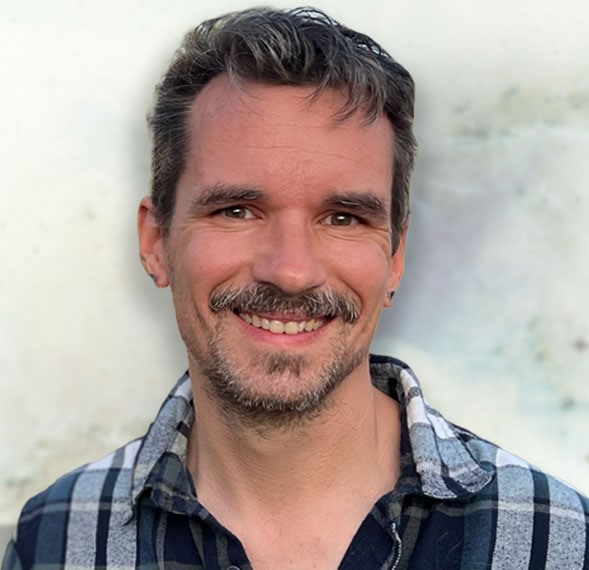
About Corey deVos
Corey W. deVos is editor and producer of Integral Life. He has worked for Integral Institute/Integal Life since Spring of 2003, and has been a student of integral theory and practice since 1996. Corey is also a professional woodworker, and many of his artworks can be found in his VisionLogix art gallery.