
Sliding Towards Authoritarianism: Our Failing Democracy (And What We Can Do About It)

Sliding Towards Authoritarianism: Our Failing Democracy (And What We Can Do About It)

Constitutional law expert and ethics professor Mark Fischler joins Deep Transformation for a wide-ranging exploration of the authoritarian drift taking shape in the United States, examining how legal erosion, civic ignorance, moral breakdown, and political dehumanization are converging to destabilize democratic life. Grounded in Mark’s integral and contemplative perspective, this conversation offers both a sobering diagnosis of the present moment and a humane call to restore dignity, civic maturity, and fact-based discourse across our deepest divides.

The Sacred Gap: Shadow, Trauma, and the Post-Tragic Life

The Sacred Gap: Shadow, Trauma, and the Post-Tragic Life

What if the parts of you that hide, protect, repress, and deflect aren't signs of brokenness — but the marks of an intelligence that has been quietly safeguarding your deepest wounds until you were ready to meet them? In this conversation, developmental coach and shadow work facilitator Alexander Love maps the evolutionary architecture of the human psyche, weaving together cutting-edge developmental theory, Eastern wisdom, and his own extraordinary journey toward friendship with the man who murdered his father.
Why Eating Got So Hard (It’s Not Your Fault)

Why Eating Got So Hard (It’s Not Your Fault)

This episode dives into how to eat sanely and joyfully in a “Food 2.0” world engineered for overeating—using Jeff Siegel’s story of anorexia, his “inner eaters” model, and an Integral lens to end the civil war between mind and body. Together we explore how biology, psychology, culture, systems, and even GLP-1 drugs like Ozempic all shape your plate—and how to reclaim a flexible, wise, and genuinely nourishing relationship with food.
Growing Beyond Conflict: The Power of Polarity Thinking

Growing Beyond Conflict: The Power of Polarity Thinking

Barry Johnson and Beena Sharma offer a clear, fast-paced masterclass on polarity wisdom—what polarities are, why they matter, and how to pursue the upsides of interdependent opposites (not by choosing either/or, and not by settling for vague both/and, but by integrating both). Along the way, they ground polarity thinking in a deeper spiritual view and show how our relationship to polarities shifts with developmental maturity, applying the lens to real-world tensions like justice/mercy, claiming power/sharing power, and being/doing across democracy, social change, and inner practice.
The Best of 2025 — The Ideas That Matter Most

The Best of 2025 — The Ideas That Matter Most

A guided orientation through some of the most important conversations Integral Life hosted this year—on leadership, meaning-making, the metacrisis, spiritual intelligence, and what kind of humans this moment is calling forth.
From Attainment to Attunement

From Attainment to Attunement

In this deep and dynamic conversation, Keith Martin-Smith and David Arrell explore what it means to grow beyond the noise of modern life into a more aligned, dignified, and awake way of being. Moving through themes of trauma integration, attention as spiritual practice, and the evolution from attainment to attunement, they offer a powerful invitation to live not from reaction, but from coherence and character.
The Highest Stages of Human Flourishing

The Highest Stages of Human Flourishing

Keith Martin-Smith and Alexander Love explore Terry O'Fallon's STAGES model of human development, focusing on the rarely-discussed MetAware tier where transpersonal awareness becomes a structural feature of consciousness, leading to the dissolution of boundaries and recognition that all meaning is constructed.
The Four Quadrants: A New Way of Seeing

The Four Quadrants: A New Way of Seeing

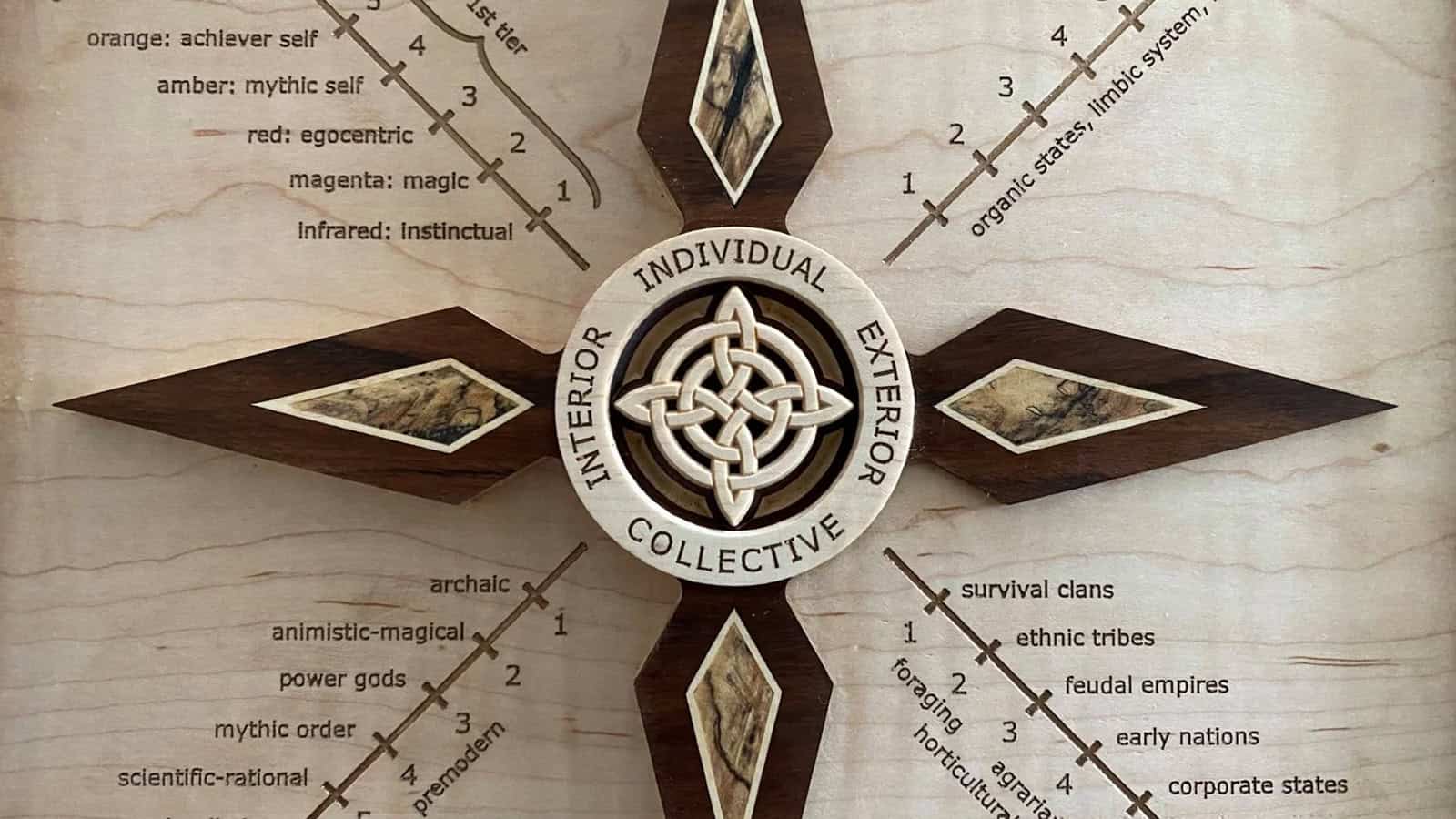
The Four Quadrants are a simple but radical upgrade in perspective: reality always shows up through four irreducible lenses—the inner and outer of the individual (I/It) and the inner and outer of the collective (We/Its)—and most conflict and confusion comes from mistaking one lens for the whole. Quadrant literacy trains you to “see whole” by locating what’s true in each perspective (experience, behavior, culture, systems), so you can communicate more skillfully and respond to complexity with greater clarity, compassion, and practical leverage.
STAGES: Cracking the Code of Human Development

STAGES: Cracking the Code of Human Development

Keith Martin Smith and Alexander Love explore Terry O’Fallon’s Stages model as a powerful lens for understanding how humans grow, make meaning, and relate across vastly different realities. Together, they reveal how developmental precision — not content or ideology — holds the key to deeper empathy, cultural healing, and truly integrative practice.
Redefining the Masculine (Without Losing the Man)

Redefining the Masculine (Without Losing the Man)

In this episode of Integral Edge, Keith Martin-Smith explores the modern crisis of masculinity and offers a powerful framework for reclaiming the healthy strengths of traditional, modern, and postmodern masculine expressions. Rather than choosing between power and empathy, discipline and vulnerability, Keith shows how wholeness means learning to embody all of them—at the right time, in the right way.
Mapping an Ecology of Integrative Approaches to Addressing the Metacrisis

Mapping an Ecology of Integrative Approaches to Addressing the Metacrisis

IAM scholars Brandon Norgaard, Nicholas Hedlund, PhD, and Claudia Meglin provide a sweeping (albeit provisional) cartography of emergent frameworks rooted in an “Integrative Worldview“—ranging from metamodernism and integral theory to systems science, process philosophy, and critical realism—that are converging around a shared impulse to address the root causes of our civilizational predicament.
The End of America? How the Founders’ Genius Is Breaking Down (And What We Can Do About It)

The End of America? How the Founders’ Genius Is Breaking Down (And What We Can Do About It)

Can America still save itself — or is collapse inevitable? Drawing lessons from history, developmental psychology, and the meta-crisis, Keith explores why systems built on “enlightened self-interest” are faltering… and what kind of leadership could restore the balance.
IAM Spotlight: Faith Development Pathway

IAM Spotlight: Faith Development Pathway

Brendan Dempsey offers a powerful re-engagement with James Fowler’s Faith Development Theory, applying cutting-edge tools from developmental psychology to illuminate how our structures of meaning evolve. This presentation reveals not just how faith matures, but why this maturation is critical for meeting the challenges of a world in search of deeper coherence.
Becoming Whole in a Divided World

Becoming Whole in a Divided World

In this thought-provoking episode of Integral Edge, Keith Martin-Smith sits down with executive coach and consciousness explorer David Arrell to explore what it truly means to become whole, both personally and collectively, amid ongoing division and conflict.
The Cycles of Time: Mapping Evolution at the Edge of History

The Cycles of Time: Mapping Evolution at the Edge of History

In this wide-ranging conversation, Terri O’Fallon and Keith Martin-Smith explore how human development unfolds through increasingly complex relationships with time, from infancy’s timelessness to the transpersonal awareness of timelessness beyond time. They examine how cultural evolution is accelerating, why recurring societal crises reflect developmental recursions, and how future leadership must integrate ethical maturity, shadow work, and a multi-generational vision.
Why Philanthropy Is the Most Powerful Lever for Systemic Change

Why Philanthropy Is the Most Powerful Lever for Systemic Change

This episode introduces a groundbreaking developmental map of philanthropy, revealing how the field is evolving from strategic rigor to empowerment-driven justice — and now toward a new paradigm of integrative systems change. Josh Leonard and Robb Smith explore how philanthropic institutions hold the unique freedom and leverage to become civilization’s steering mechanism, capable of addressing root causes rather than symptoms in the age of the metacrisis.
How Can DEI Survive? (And Should It?)

How Can DEI Survive? (And Should It?)

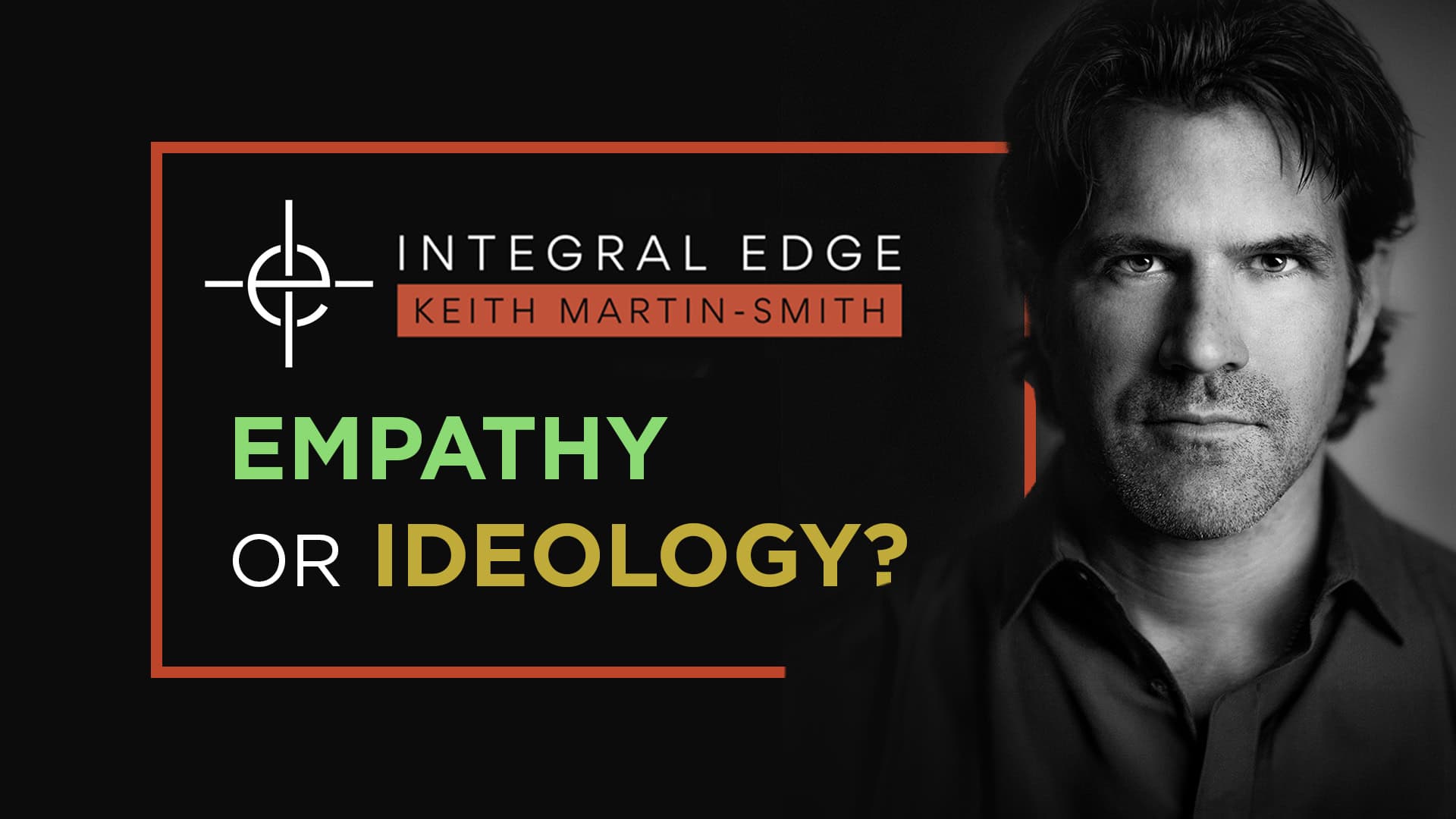
Keith Martin-Smith offers a bold, developmental critique of modern DEI, tracing its evolution from fairness-based policy to postmodern orthodoxy. He explores how inclusion can become exclusion when empathy gives way to ideology—and outlines how DEI might survive by embracing complexity, dissent, and shared humanity.
Terminal Crisis: The Economic World War Has Begun

Terminal Crisis: The Economic World War Has Begun

The global system isn’t collapsing — it’s transforming. In this urgent episode, Robb Smith reveals why the U.S. is facing a historic terminal crisis, what comes next in the 700-year cycle of capital accumulation, and how a new world order — or global anarchy — is already taking shape.
Caught in the Algorithmic Undertow

Caught in the Algorithmic Undertow

Bruce Alderman and Josh Leonard explore the slow, invisible pull of digital systems — algorithms, platforms, attention economies — that subtly yet profoundly shape our beliefs, behaviors, and social worlds.
A Sociology of Big Pictures: Network Strategy for a 21st Century Worldview

A Sociology of Big Pictures: Network Strategy for a 21st Century Worldview

The Institute of Applied Metatheory (IAM) presents A Sociology of Big Pictures: Network Strategy for a 21st Century Worldview by Robb Smith, an in-depth exploration of how grand integrative frameworks emerge, compete, and evolve within the modern attentional landscape. As we enter the Transformation Age — marked by rapid geopolitical, technological, ecological, and epistemic shifts — Smith argues that the need for a coherent, integrative worldview has never been greater.
IAM Spotlight: The Cultural Complexity Index

IAM Spotlight: The Cultural Complexity Index

Brendan Graham Dempsey introduces the Cultural Complexity Index (CCI), a groundbreaking initiative that empirically measures cognitive complexity in historical texts, revealing patterns in human meaning-making across time. By analyzing symbolic representation rather than collective belief systems, the CCI provides fresh insights into cultural evolution while distinguishing individual cognitive development from broader social dynamics.
The Big Picture Mind: What Every Elite is Missing

The Big Picture Mind: What Every Elite is Missing

In this first episode of The Big Picture Mind, Robb Smith explores the rapid, self-reinforcing change that is driving a global metacrisis across governance, technology, culture, and meaning. To navigate this, he calls for the rise of Big Picture Minds—people who can think integratively, restore coherence, and actively shape the future rather than be overwhelmed by it.
Polarization and the Algorithmic Undertow: Integral and Critical Realist Perspectives

Polarization and the Algorithmic Undertow: Integral and Critical Realist Perspectives

Bruce Alderman explores how our rapid transition into a globally networked information environment has created unprecedented challenges for human cognition, social cohesion, and collective meaning-making and sensemaking.
What We’ve Learned: 2024 Reflections and Looking Ahead to 2025

What We’ve Learned: 2024 Reflections and Looking Ahead to 2025

The Institute of Applied Metatheory (IAM) is revolutionizing how we tackle global challenges by applying integrative metatheories—holistic frameworks that unify knowledge across disciplines. In this episode, Robb Smith and Josh Leonard reflect on IAM’s 2024 accomplishments and share an inspiring vision for 2025, highlighting leadership, collaboration, and storytelling as keys to driving transformational change.
1 2 3 16