
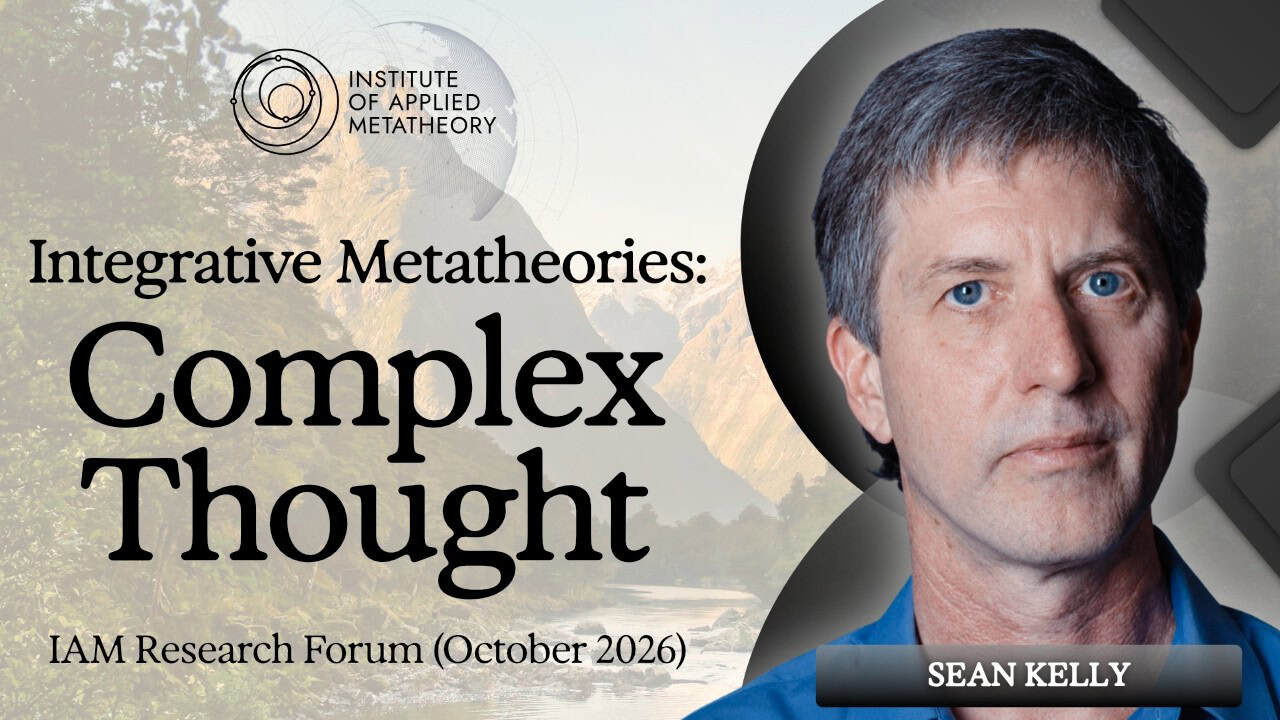
In this IAM Research Forum session, Sean Kelly introduces the complex thought of Edgar Morin, his mentor and friend of nearly forty years. Morin coined the word polycrisis in 1992, long before it went viral, and was convinced that a world this entangled can’t be understood by a way of thinking that cuts it into separate pieces.
He spent thirty years building an alternative in the six volumes of La Méthode, and its guiding habit is to hold together what we usually keep apart, like order and disorder, or gain and loss. Kelly follows that habit from the birth of the universe, through a single cell that already behaves like a subject, all the way to our own ideas, which take on a life of their own until, as Morin put it, we possess ideas which possess us. The same goes for us: homo sapiens, the wise animal, is also homo demens, the animal capable of madness, and also of rapture and creative expression. In the final volume, complex thinking becomes an ethics, and Morin’s word for the good is reliance: relinking what has been separated, starting with humanity and nature.
Watch or listen · 1:28:41
Sean Kelly
Sean Kelly
“Thank you, Nick, for the introductions.”
Chapters (8)
Held with integral theory
Where they meet. Kelly borrows Wilber’s “dignity and disaster” for the modern paradigm, says Morin gives “his version of Wilber’s dissociation” of the Big Three, and places Morin’s noosphere, sociosphere and psychosphere in Wilber’s quadrants. Both set out to relink what modernity split apart: subject and object, fact and value, the human and the rest of nature.
Is disorder as basic as order?
The challenge. Morin’s first volume opens with what he calls the chaosmos. Against the Cartesian-Newtonian ideal of a rational order “defined hierarchically as a command,” Kelly explains, Morin finds order and disorder bound together from the Big Bang on, in stars, quantum events and thermodynamics. In place of order he puts organization: order, disorder and interactions together. Integral tells evolution as Eros, a drive toward greater wholeness, and complex thought would ask what place that leaves for disorder.
The reply. Wilber calls the self-organization that scientists such as Stuart Kauffman describe Eros. Asked whether evolution has an omega point, he says its first kind of teleology “has a random component”: it is “a bit lila,” the play of Brahman. Each new form is then repeated and becomes a fixed path for all that follow.
Where it lands. A real difference. Both give chance a creative part from the start. For Wilber, chance plays at the leading edge of a drive, and what it makes settles into habit. Morin keeps disorder at work inside every organization, even an old and stable one, and Kelly says he sees no omega point, only a lure, which is love. That decides whether evolution can be trusted to keep climbing or each new order has to be protected.
Which observer?
The challenge. Morin brings the observer back into every system: “the subject is there from the beginning.” Integral agrees and asks which observer. Wilber says most epistemology simply assumes “a rational observer,” when developmental studies show many levels of consciousness, each knowing “based on the structure of the level” it is at. A method that includes the observer then needs an account of how observers grow.
“And one of the first things that you learn when you look at developmental studies is that there isn't just a single layer of consciousness.”
Ken Wilber
Become a member to hear it.
The reply. Morin’s answer is a discipline for the knower. In his ethics, Kelly explains, each person keeps up a “psychic culture”: ongoing self-critique, shadow work in Jungian terms, and the practice of complex thought. That means critiquing one’s own criticisms, staying open to others’ critique and examining one’s own unconscious assumptions.
Where it lands. A real difference. Both say the knower has to change. Morin asks the same of anyone at any point in life: find your blind spots and let others name them. For integral, some truths open only at a later stage or in a deeper state, and self-critique alone will not reach them. That decides whether Morin’s “network of meta points of view” is open to anyone who practices honesty, or depends on how far the one moving through it has grown.
What holding both shows. Kelly calls integral’s quadrants and levels “essential” and offers Morin’s dialogic, recursive and hologrammatic principles for thinking between them. Both also draw on process philosophy: Morin calls even the E. coli cell “a subject,” and Wilber takes prehension, a bit of feeling all the way down, from Whitehead. And Morin’s lure of love sits near Wilber’s Eros. Kelly calls Morin “Teilhard without the metaphysics,” which leaves both a question: how much can a lure promise?
About Sean Kelly
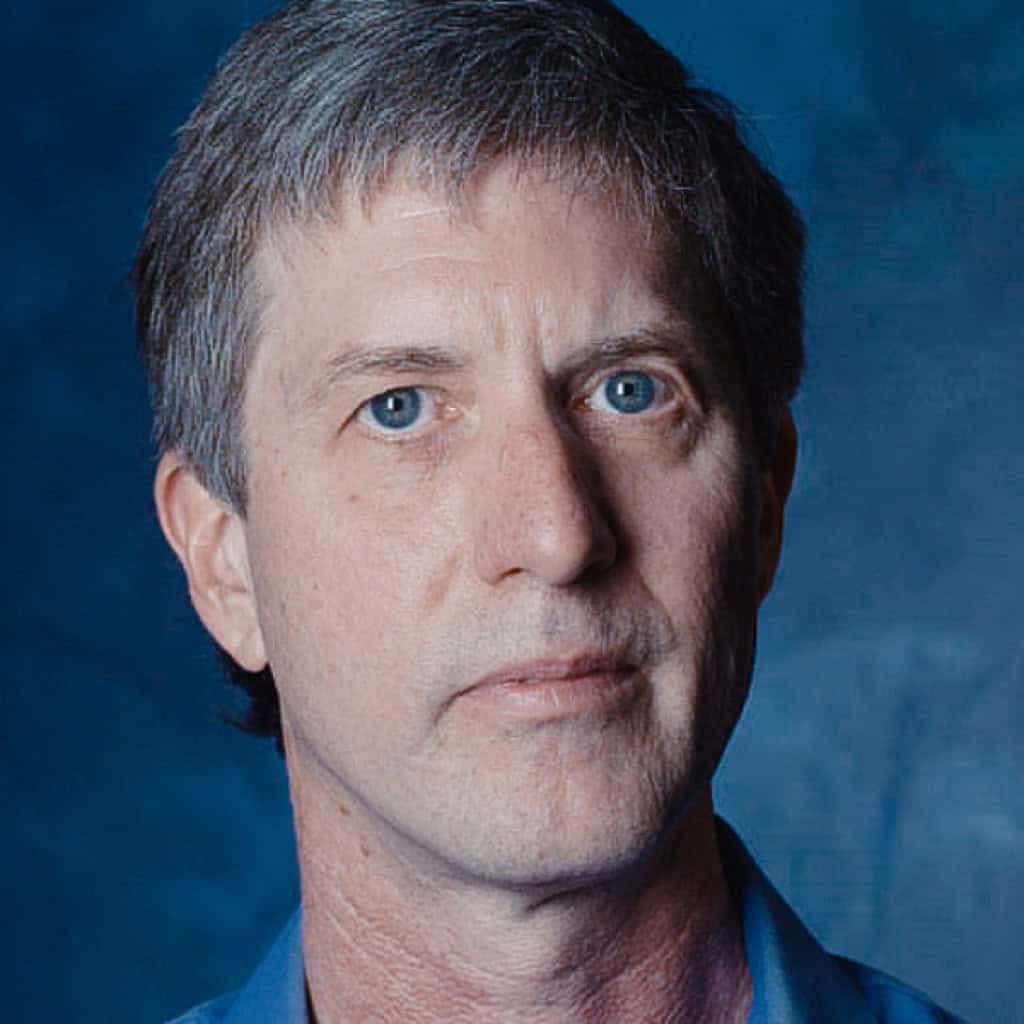
Sean Kelly is a professor in the Philosophy, Cosmology, and Consciousness program at the California Institute of Integral Studies, where he has taught since 1997, and he received his PhD in religious studies from the University of Ottawa in 1988. He is the author of Becoming Gaia; Coming Home: The Birth and Transformation of the Planetary Era; and Individuation and the Absolute: Hegel, Jung, and the Path toward Wholeness, and co-translator of Edgar Morin's Homeland Earth. His research covers the evolution of consciousness, integral ecologies, and transpersonal and integral theory. He has taught taiji since 1990 and is a trained facilitator in The Work that Reconnects.