
Igniting Brilliance: An Integral Approach to Education
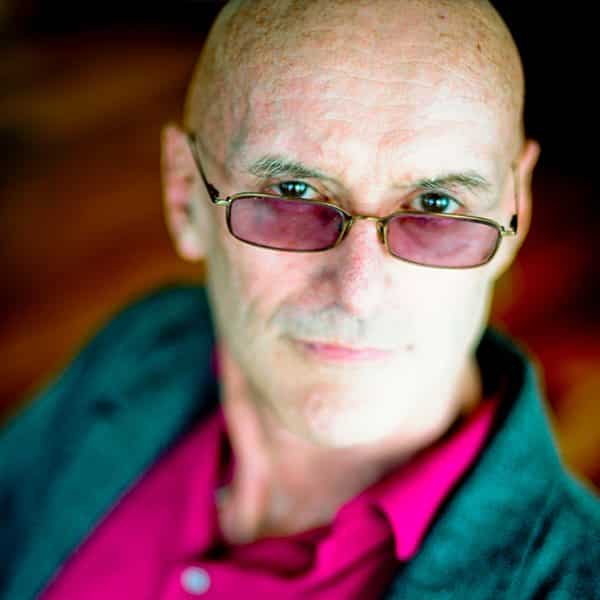
Whenever Ken Wilber is asked where he thinks integral thought could make the biggest difference in the world, he always answers the same way: "education". After all, the integral map represents an all-encompassing, all-inclusive survey of the human experience, offering the most comprehensive record of knowledge, intelligence, potential, and development that we have ever seen, making this an exceptionally fertile time for a full-scale renaissance in education. Listen as Willow Dea talks to Ken about her new book Igniting Brilliance: Integral Education for the 21st Century, exploring the promise of an educational approach that can fully nourish, enrich, and challenge our children in every dimension of their lives.
Total running time: 2 hours 25 minutes
Be sure to check out the Overview to Integral Education Course on MetaIntegral.com!
We’re all familiar with the harrowing statistics on education in America.
Last year, 69% of all U.S. eighth-graders scored below proficient in Reading. Also in 2010, 68% of U.S. eighth-graders scored below proficient in Math.* That’s a whopping two-thirds who, at 13 and 14 years of age, lack the bare bones skills needed for high school.
But on the heels of the documentaries that brought these numbers to light – Davis Guggenheim’s documentary Waiting For Superman (2010) and Vicki Abeles’ Race to Nowhere (2010) – comes Igniting Brilliance: Integral Education for the 21st Century, a book that shifts the conversation away from education’s failures, to education’s potential.
Edited by Willow Dea, Igniting Brilliance brings together education thought leaders from around the globe, all of whom are part of an emerging and transformative field: Integral education.
“Integral education combines the character and personal development of ‘hippie’ schools, with the academic rigor of prep academies. We in the integral community recognize that academic performance and qualities like kindness, creativity, etc. aren’t mutually exclusive. In our classrooms, we want to create global citizens for the 21st century.” –Willow Dea

Part primer on integral theory, part “greatest hits” stories about integral education in the classroom, and part instructions on application, Igniting Brilliance offers essays from education’s brightest voices: Nancy Simko of Manhattan’s Blue School (co-founded by Blue Man Group CEO, Matt Goldman), John Gruber, recipient of a Teacher Recognition Award from the United States Presidential Scholars Program, and several members of the Next Step Integral Education group.
A breath of fresh air for teachers from Waldorf elementary schools to public high schools, Igniting Brilliance is an inspiring guide that surprises readers with its creative pedagogy, then confidently takes their hands, and shows them how to transform a classroom.
Purchase Igniting Brilliance: Integral Education for the 21st Century now!
*Source: National Center for Education Statistics, “Special Analysis 2010.”
Image 1 by Diane Calvario [+view gallery]
Image 2 by David Wetzl [+view gallery]
Images 3 & 4 by Kelli Bickman [+view gallery]
Image 5 by Pamela Sukhum [+view gallery]

Comments
Sun, 12/16/2012 - 16:10
After listening to this talk in it's entirety it appears to me that Willow was mostly discussing how a few students from wealthy and privileged families in a handful of private schools are beginning to benefit from what integral can bring to education. This seems to me to be good but partial. I would love to also see all students, including all public school students of the world, be blessed in this way. Sorry if my frustration over the slowness of our pace affected the tone of my previous comment here.
What I did not hear emphasized is that real and true integral education will need to be offered by teachers who have developed into the integral level. It will have to be more than a heap of strategies and maps on the wall. I am so glad that John Gruber was recognized as being such a teacher. Sometimes it seems like he is one of the few people I know of who has been affected by this apparent integral disease and still retains his basic human decency. I would love to be able to listen to a talk with him and Ken if that was ever possible.
http://nextstepintegral.org/about-us/team
Wed, 10/03/2012 - 06:56
Education is a potentially fertile field in which to sow the beautiful seeds of integral. It was wonderful to hear Ken's voice after so long a time. He patiently and stably brings forth the good news of integral. To throw young people out into the world without even beginning to understand what a decent and complete human being would even look like is not a good idea. I liked the point he made about integral education including the treatment of the teacher.
To make wide scale change in the educational system might not be such an easy task to accomplish. I am concerned about having someone like Willow Dea as our sole ambassador for this. She admits to not being a teacher, does not seem to have much of an idea what real world education is about , and appears to communicate in a somewhat condescending and arrogant style by stringing together long lists on pseudo integral buzzwords. If we are to begin to get wide scale traction in changing educational systems and the wider world, and I pray we do, we will need to up our game.
Wed, 10/03/2012 - 00:00
In Perú, public primary and high school educational levels are quite deplorable because a large percentage of it has been high jacked by a somewhat radical left wing organization called SUTEP. They demand higher salaries but teachers themselves tend not to be well educated. They even march in the streets throwing rocks at public buildings. Besides this, open signal TV focuses too much on sensationalism in order to capture the audience's attention: Everyday heinous crimes and corruption scandals are dramatized and loudly publicized in spite of some intelligent voices warning against it and opposing it. The system allows it. Business is first -apparently even before human dignity- and against this there is some intellectual and political resistance to what is perceived to be the main culrpit: neoliberal policies that allow free market without ethics to blossom. Another response against this sickening information mud (a response somewhat similar to the resurgence of fundamentalisms and polarizations in the U.S. Europe and the Middle East) is a growing number of people turning towards more fundamentalist evangelical Christianity. In other words, the options seem to be going back to clear-cut, well-defined values either in the passé political spectrum or in religion. Regarding the latter, interestingly, it is a growing attention to fundamentalist U.S. style religion.
However, there are some integral and integral-like inquiring/research responses in higher academia. They are seeking to create a better educational plan and, since I'm in contact with one of these efforts linked to the Universidad Ricardo Palma, I think I'll read Willow's book and see if it can be shared and talked about at that level. It may be compatible with other visions and models being locally considered.
I think that here, for the most part, the concept of HOLISM has been more recognized than Integral thinking a-la-Wilber. This may be in part because the few books available are usually shelved at new age, self-help and metaphysical sections and because this kind of integralism is quite open to Buddhism and this may not be well-understood locally. Thus, so far the Integral Movement a-la-Wilber seems so far to be receptive among green to post green, U.S. middle class, self-development, psychology interested, eurocentrically well-educated individuals. Here philosphers, academic intellectuals in general and the legal system are closer to French and Continental philosophy and, since Marxist ideas were also quite influential, and are recently being transcended and included led by sociologist-philosopher Aníbal Quijano and his concept of "colonización-descolonización." Under this concept Marxism is also considered a eurocentric idea that may not apply to our local historical context.
I don't know how Integral Theory a-la-Wilber will be received in this context but I personally think that it had many very important and valid elements even if I don't necessarily agree with all of it or with how it is being understood at present. Unfortunately, I've detected a lack of intellectual interest to move beyond the prevalent model especially if plausible complementary ideas come from overseas. However, I welcome the fact that Meta Integral is inviting Edgar Morin but I think that an interest in transcending and including the lines of "either-or" eurocentric thinking without realizing that some traditional eurocentric shadows remain in the biases will not make Integral Theory easily applicable to Perú, Latin America and the whole world. The world besides how Ken might partially judge it correctly also possesses integral-level wisdoms that are not being recognized because, by not being participants of the more clear-cut green to post green Euro-American historical process in the emergence of ideas and sensibilities, these other parts of the world are implicitly judged under an over-generalization.
Mon, 10/01/2012 - 13:44
Willow Dea is so cool. I wish she could have had more time to speak during this interview. She should do a TED like talk here.