

Log in or sign up to watch the full discussion.
Become a member to access the full episode
Start building your big picture mind & support the global emergence of Integral consciousness

“Integral Life is the most important and globally-relevant platform for the leading edge of Integral consciousness evolution”
– Eugene P.
In this intimate conversation, Buddhist practitioner and teacher Edward Sczudlo traces the full arc of a lifetime devoted to awakening — from a spontaneous recognition of continuity at age two, through profound transmissions, meditative breakthroughs, and the long work of integration, to the embodied, grace-oriented practice he now teaches in Bali. Together with host Kimberley Lafferty, Edward explores what genuine spiritual realization actually looks and feels like from the inside, and why the ancient science of liberation the Buddha offered 2,600 years ago may be more urgently relevant — and more irreplaceable — than ever.
Perspective Shift:
-
The awareness looking out through your eyes right now has no beginning and no end.
The “you” that looked in the mirror at two years old existed before your great-grandparents were born and will continue beyond your death. Most people spend their entire lives identified with the contents of awareness — thoughts, feelings, memories, roles — without ever noticing the awareness itself.
-
Your ethical commitments are not moral rules — they are a metacognitive training system.
The Pratimoksha, Bodhisattva, and Tantric vows of the Buddhist path are not primarily about being “good.” They are a daily practice of taking your own mind as an object — observing thoughts, feelings, and behaviors as phenomena rather than identifying with them.
-
Shadow work without emptiness is incomplete. Emptiness without shadow work is dangerous.
Psychological integration and spiritual awakening are interdependent. If you understand emptiness deeply, shadow work becomes vastly more powerful, because you recognize that everything you’re reacting to in others is already a projection of your own mind. But deep practices that open prana and dissolve ego structures can be destabilizing without psychological grounding.
-
Striving toward enlightenment can become the very thing that blocks it.
The “let’s do it” energy — the fierce achievement-orientation that drives early spiritual development — is healthy and necessary at first. But there comes a turning point where the drive to achieve realization becomes its own obscuration. The deepest practices are not done to achieve or acquire something. They are done as a recognition and celebration of what is already present.
Are you ready to awaken?
There are people who talk about the spiritual path, and there are people who have walked it — through years of solitary retreat, through the grace of living transmission, through the fires of personal dissolution and reconstruction, and out the other side carrying something real. Edward Sczudlo is the latter kind.
In this deeply intimate episode of Evolving Spirit, host Kimberly sits down with her longtime colleague and fellow practitioner for a rare and candid conversation about what it actually looks like to dedicate a life to awakening — not in theory, but in the lived, embodied, sometimes messy, often luminous reality of a genuine spiritual biography.
Edward’s path began before he could articulate it. Between the ages of two and four, he looked down at his hands and had a spontaneous recognition: this body was not his first. He had been here before. He had unfinished work. That early seed of what Buddhist philosophy calls the continuity of consciousness would stay with him through a complicated childhood in Washington, D.C. — one that swung between diplomatic circles and street culture, and included years of heavy pharmaceutical medication that left him, in his own words, profoundly numb. Coming off those medications at thirteen, he began to un-numb. And the path found him.
What followed was a spiritual biography of remarkable range and depth: a chance prostration at a Thai monastery in D.C. that he would only later discover was the very monastery where his root teacher had stayed; a Shaktipath transmission from Geshe Michael that triggered three days of overwhelming bodhichitta so intense he gave away all his money and his clothes on winter streets in New York; years of simultaneous immersion in Indo-Tibetan Buddhism and Hatha Yoga under Dharmamitra; a profound meditative insight into emptiness that rendered speech harmful and unnecessary for twenty-four hours; and an ongoing evolution from fierce achievement-oriented practice toward something more spacious — what he calls the movement from effort into grace.
Together, Kimberly and Edward explore the deep architecture of the awakening path across multiple frameworks — the Tibetan Buddhist Lam Rim, the stages of Anuttara Yoga Tantra from creation to completion, the Dzogchen practice of settling into natural awareness, and the developmental psychology frameworks that Kimberly brings from her doctoral research. What emerges is a nuanced and illuminating portrait of how states and stages interact — how a single moment of transmission can catalyze a permanent shift in one’s center of gravity, and how the integration of those shifts requires both spiritual depth and psychological honesty.
The conversation takes on particular urgency around the question of ethics — not as a set of moral rules, but as a sophisticated metacognitive training system. The daily practice of examining one’s vows, the two teachers argue, trains exactly the capacity that both contemplative traditions and developmental psychology point toward: the ability to take one’s own mind as an object, to observe thoughts and behaviors as phenomena rather than identifying with them completely. This is construct awareness. This is what turquoise looks like in practice. And it turns out the Buddhist tradition has been teaching it for over two thousand years.
Edward and Kimberley then go on to discuss artificial intelligence and its relationship to spiritual development, both agreeing that AI will solve problems at previously unimaginable speeds — but that wisdom is a different kind of knowing entirely, one that emerges only through direct first-person encounter with the nature of mind. And when the question turns to what AI simply cannot do, both arrive at the same answer: transmit. The living Shaktipat — the irreducible transmission of realized understanding between embodied beings — remains, for now, beyond the reach of any algorithm.
The episode closes with Edward, now living and practicing in Bali surrounded by ancient temples he visits multiple times a week, offering a single piece of guidance for anyone overwhelmed by the collective turbulence of the present moment. Not a framework. Not a prescription. Just a question: Are you ready to wake up?
It is, as both teachers know, a question that carries the whole path inside it.
If this conversation resonates, you’re invited to join Kimberley, Terri O’Fallon, and Kim Barta for a live, in-person retreat in Maui, where we’ll explore these themes experientially and in depth. This gathering is designed for those who sense that inner work, awakening, or development has stalled — not because something is wrong, but because something essential is asking to be included. Through guided inquiry, dialogue, and embodied practice, we’ll work with spiritual, developmental, and shadow dimensions together, creating the conditions for real integration to occur. Details and registration can be found at stagesinternational.com/the-gathering.
 Key Questions
Here are some questions you can contemplate while listening to this discussion. We suggest you take some time to use these as journaling prompts.
- Am I ready to wake up? Not as a rhetorical question, but as a genuine inquiry. What would have to change — in my priorities, my schedule, my relationships, my self-image — if the answer were truly yes? And what is it, right now, that is making me hesitate?
- When I look at my hands right now, what is the awareness that is looking? Can I sense, even for a moment, the difference between the contents of my experience — thoughts, sensations, emotions — and the awareness that is witnessing them?
- What are the “preposterosities” in my own life — the moments too improbable to be coincidence? Have I taken the time to weave them together into a coherent picture? What might they be pointing toward about the nature of my path, my purpose, or the intelligence that seems to be operating beneath the surface of events?
- Have I had a state experience — a glimpse of something vast, luminous, or boundless — that I haven’t fully honored or integrated? What meaning have I made of it? What meaning might I still be avoiding? And do I have a community or teacher capable of holding and reflecting that experience back to me without diminishing it?
- When I think about the AI era that is arriving, what is the quality of knowing I most want to protect and cultivate in myself? Not the ability to process information faster — but the wisdom that knows what matters, what the root of suffering actually is, and what is worth doing with this one life. How am I developing that?
Previous Episodes of Evolving Spirit







Become a member to access the full episode
Start building your big picture mind & support the global emergence of Integral consciousness
“Integral Life is the most important and globally-relevant platform for the leading edge of Integral consciousness evolution”
– Eugene P.
About Edward Sczudlo
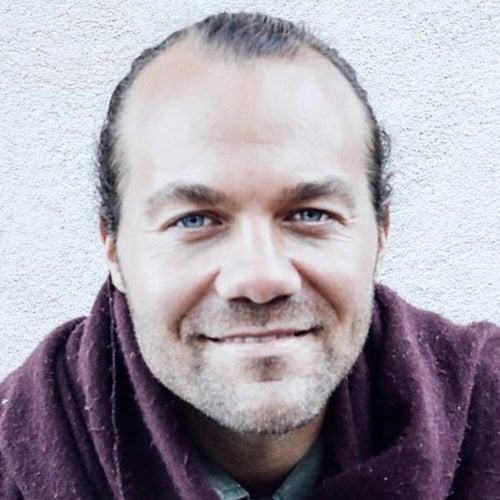
Edward Sczudlo is a photographer by profession and social influencer by birth, Edward has an entrepreneurial spirit and is passionate about projects that are creative and socially driven. He is inspired by companies that have ethical components to their work and impact social and global change. He helps these kinds of companies expand their reach through exciting visuals, publishing, and conversation.
About Kimberley Lafferty
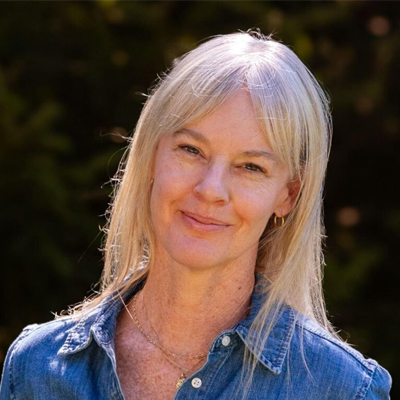
Kimberley Theresa Lafferty is a seasoned teacher-practitioner specializing in constructive developmental psychology and Indo-Tibetan Vajrayana. She leads multi-year, private spiritual education cohorts with the Confluence Experience. Kimberley co-leads, with Terri O’Fallon, the penultimate Minds I year-long developmental course of Stages International. She is an active Board member for the Association for Spiritual Integrity. Kimberley is also a wife and mother to a young son, living in a remote valley of the North Cascades of North America which deeply impacts her worldview and practice.