

👉 Listen on the go! Click here to find this episode on Spotify.
Perspective Shift
- The body isn’t what you transcend — it’s what you return to. Traditional Buddhist paths treat the body as something to see through, dissolve, and release. But the deeper truth is that awakening without embodiment isn’t liberation — it’s dissociation wearing liberation’s clothes. The real journey isn’t just up the mountain. It’s coming back down and re-inhabiting everything you left behind.
- Conflict isn’t the obstacle to awakening. It’s the curriculum. Every developmental transition — every move up the spiral — is itself a form of conflict: two perspectives trying to occupy the same space at the same time. The friction isn’t a problem to eliminate. It’s the intelligence of evolution pressing for a greater integration.
- Zero-sum conflict is a developmental stage, not a moral failing. When people can only see enemies, it’s not because they’re bad — it’s because they’re operating from a developmental altitude where no other response is available. The polarization tearing the world apart isn’t a values problem. It’s a developmental emergency. And it can’t be solved at the same level of consciousness that created it.
- Nobody is smart enough to be 100% wrong. Every perspective, including the ones you find most repugnant, holds a piece of the truth. This isn’t relativism — it’s the antidote to the moral superiority that makes genuine dialogue impossible. Self-righteousness presumes I am morally superior to you. And the moment I do that, I’ve stopped learning, I’ve stopped evolving, and I’ve become part of the problem I think I’m solving.
What does it actually mean to wake up — not just in the meditation hall or the monastery, but in the kitchen, the argument with your partner, the ongoing catastrophe of the news?
That’s the question animating this conversation between Keith Martin-Smith and Miles Kessler, and it’s one both men have spent decades answering not in theory but in practice. Miles is a sixth-degree Aikido black belt, a Mahasi Vipassana teacher, and founder of the Integral Dojo in Tel Aviv — a practitioner whose path wound through eight years in Japan, three years of intensive retreat in Burma, and eventually a reckoning with everything those years of high-altitude practice had left behind: shadow work, emotional development, and the hard relational work of what he calls the return path — coming back down the mountain and making amends for everything you bypassed on the way up.
The conversation opens with a shared diagnosis of what’s missing in traditional Buddhist approaches to awakening: the body. Both men are deeply trained in classical lineages, and both arrive at the same blind spot. Miles explains the internal logic of Vipassana — the body deliberately treated as dissolving, impermanent, to be seen through rather than inhabited. But Keith counters with an insight from his teacher Jun Po Roshi: you’re not free from the body — you’re just not in it. Dissociation can masquerade as liberation. Trauma lives in the body. If you’re floating in the spaciousness of no-self, you may be completely missing the somatic signals that would tell you something important is actually happening. Keith tells a story that lands with the precision of a Zen anecdote: his teacher grabbing him by the shirt during a “transcendent” state and shaking him — feet on the fucking ground! Awakening is right here, not up there.
This sets up the episode’s central argument: that genuine awakening requires not just the ascending path toward emptiness and non-self, but the return path — back into the body, the marketplace, the relationship, the conflict. And the return path has its own rigors and its own humiliations. From here, Miles introduces his Evolution of Response model, which maps the integral spiral of development onto stages of conflict resolution capacity — from purple’s pure fight-flight-freeze survival response, through the moral authority of blue, the self-awareness of orange, and the relational attunement of green, all the way to a second-tier creative response in which two sufficiently centered, embodied people in conflict generate a third intelligence: a novel emergence that neither could reach alone, leaving both participants not just satisfied but genuinely transformed.
That framework carries urgent real-world stakes. Miles is speaking from Tel Aviv in the aftermath of October 7th; Keith is watching the acceleration of political polarization in America. Both men arrive at the same conclusion: polarization itself — not any particular political threat — is the most dangerous force at play. And the algorithm is making it worse, monetizing outrage and driving collective regression toward the brainstem responses that generate the most clicks. Their prescription is specific and demanding: cultivate genuine centered awareness through actual practice, find a real sangha that offers honest relational feedback, and seek out people you disagree with not to endorse their conclusions but to find their care — the ground from which real dialogue becomes possible. Ken Wilber’s injunction lives here as a practice, not just a principle: nobody is smart enough to be 100% wrong.
The episode closes with something both grounding and quietly hopeful: the reminder that the dojo, the cushion, the intimate relationship, and the political argument are all the same practice space. There is no safe zone where awakening is easy and the real work is somewhere else. The real work is always exactly where you are. And with greater perspective — integral, embodied, shadow-informed — comes a correspondingly greater responsibility to model something different: not just a better politics, but a better way of being in conflict altogether.
 Key Questions
Here are some questions you can contemplate while listening to this discussion. We suggest you take some time to use these as journaling prompts.
- Where in my life am I confusing dissociation with freedom? Are there areas — relationships, emotions, physical sensations — where I’ve learned to “rise above” rather than move through? What might it mean to actually descend into those places rather than transcend them?
- What is my relationship to my own body as a source of wisdom? Do I treat somatic signals — tension, contraction, activation — as noise to be quieted, or as information to be read? When was the last time my body knew something before my mind did?
- Where am I still on the ascending path when the real growth is asking me to return? What have I left behind — in relationships, in shadow, in the body, in the marketplace — on my way toward higher states or greater understanding? What would it mean to go back for it?
- How do I actually behave in conflict — not how I think I behave, but what a trusted witness would observe? Am I operating from the developmental altitude I believe I am, or is there a gap between my self-concept and my actual responses when things get hard?
- Where am I operating in zero-sum mode and calling it something else? Where in my life am I trying to win — in arguments, in relationships, in my own internal narrative — while telling myself I’m seeking truth or growth?
- When I encounter someone whose views I find repugnant or dangerous, can I find their care? Not their conclusions — their care. What would it require of me to genuinely look for that, and what does my resistance to looking tell me about where I am developmentally?
- What is my own Evolution of Response in a moment of real conflict — with a partner, a colleague, someone across the political fence? Can I trace the arc from my first reactive impulse all the way to the possibility of a positive-sum resolution? Where do I typically stall out, and what would it take to move through that?
- Am I contributing to the healing of polarization or to its momentum? Every interaction — in person, online, in my own mind — is a vote for one or the other. What does it look like, concretely and practically, to embody a third way in the specific conflicts I’m actually living?
About Integral Edge

Welcome to a world on the edge.
AI is rewriting the rules. Politics are more polarized than ever, with the far right and left in an endless clash. The metacrisis looms, late-stage capitalism is unraveling, DEI is evolving, and strongmen are rising once more.
But that’s just the beginning.
This podcast takes an integral look at the forces shaping our reality—from cutting-edge neuroscience and biohacking to cryptocurrency, global economics, and the ancient wisdom of awakening, mindfulness, and embodiment.
Keith Martin-Smith brings a deep, multi-perspective lens to the chaos, cutting through the noise to find what actually matters.
This isn’t just another commentary on the world. It’s a guide to seeing—and living—beyond the divide.
New episodes of Integral Edge every second and fourth Wednesday of the month at 10 AM PT. See our events calendar to join the live discussion!
Previous Episodes of Integral Edge











Become a member to access the full episode
Start building your big picture mind & support the global emergence of Integral consciousness

“Integral Life is the most important and globally-relevant platform for the leading edge of Integral consciousness evolution”
– Eugene P.
About Keith Martin-Smith
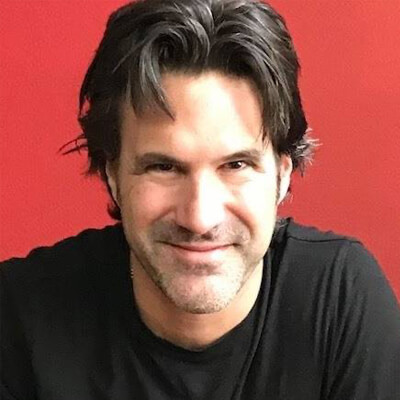
Keith Martin-Smith is an award-winning author, writing coach, and Zen priest. He is passionate about human connection, creativity, and evolution. His books include "The Mysterious Divination of Tea Leaves", "A Heart Blown Open", and "The Heart of Zen". His most recent book is his first novel, "Only Everything", a novel that explores the promise and the pain of following an artist's path.

About Miles Kessler
Miles Kessler Sensei (6th Dan, Aikikai) is an American teacher of aikido, meditation, and integral practice. Miles began Aikido in 1985 and in 1989 moved to Iwama, Japan where he lived and practiced Aikido full time at the famous Ibaraki Dojo.