
👉 Listen on the go! Click here to find this episode on Spotify.
Perspective Shift
- The meta-crisis may not be a problem to solve, but rather a period of rapid social, cultural, and personal evolution. What we call a “crisis” might actually be the discomfort of transformation at a planetary scale. By framing it as something to fix, we may be reinforcing the very mindset that created it. The deeper question is how to participate consciously in a process we cannot control.
- Fragmentation is the hidden crisis beneath all others. Modern life splits us into compartments—work, therapy, relationships, spirituality. The deeper need is integration: systems where development happens across all domains of life simultaneously.
- The next stage of civilizational intelligence is something more than cognitive, it’s an integration of heart and mind. Beyond analytical thinking lies a form of intelligence that can hold paradox, integrate opposites, and respond with both clarity and compassion. This heart-centered awareness is essential for navigating complexity.
- Human development is not about escaping or leaving lower stages behind, but integrating them into a larger sense of self. A “higher” stage without a healthy foundation is fragile. True maturity includes red power, amber structure, orange agency, green care, and teal awareness — all working together as a coherent whole.
- We are not designing the future, as much as we are aligning ourselves with what wants to emerge. The work is not to impose a perfect system, but to create the conditions where something new can arise organically. Less control, more attunement.
What if the global metacrisis isn’t just something happening out there in the world — but something each of us is actively participating in?
In this episode of Integral Edge, Keith Martin-Smith sits down with Dr. John Churchill to explore one of the most pressing and perplexing questions of our time: how do we make sense of a world where every major challenge seems interconnected, accelerating, and beyond any single solution?
From climate change and AI disruption to cultural fragmentation and rising loneliness, we are no longer dealing with isolated problems. We are facing a polycrisis — a complex web of systems that can only be understood through a shift in how we see reality itself.
And the problem is, even our most advanced ways of thinking may not be enough.
Drawing on developmental frameworks, Keith and John unpack the critical transition from green to teal consciousness—a shift from seeing complex systems in the world to recognizing that we ourselves are part of those systems. Where green can identify patterns of bias, inequality, and interdependence, teal begins to see that even our perspectives, identities, and interpretations are constructed frameworks of the mind.
This opens the door to a more radical question: Is the meta-crisis something we can fix—or is it revealing the limits of the mindset that tries to fix it?
Together, they explore:
- Why modern problems can no longer be solved in isolation
- The difference between systems thinking and self-reflexive awareness
- How labeling something a “crisis” shapes how we relate to it
- The role of the “heart-mind” in navigating complexity
- Why integration—not elimination—is the key to development
- And what it means to participate consciously in a world that is rapidly evolving
This is not a conversation about easy answers. It’s an invitation to see more clearly—to recognize the lenses through which we interpret reality, and to consider what might emerge when those lenses themselves become visible.
Because the future may not depend on how we fix the world, but on how deeply we learn to understand the multiple ways of seeing it.
 Key Questions
Here are some questions you can contemplate while listening to this discussion. We suggest you take some time to use these as journaling prompts.
- Can I see the systems shaping the world — and can I also see the systems shaping how I see? Where does my perspective feel like reality itself, rather than a constructed lens I’m looking through?
- When I identify problems in the world, do I also question the framework I’m using to define those problems? What assumptions am I making about what’s broken, and how it should be fixed?
- Am I relating to the metacrisis as something “out there,” or as something I am participating in? What changes when I include myself as part of the system I’m trying to understand?
- Do I believe that better thinking will solve our problems, or that thinking itself may be part of the limitation? What if the impulse to “fix” is shaped by the very mindset that created the crisis?
- What would it mean to see my beliefs, values, and identity as constructs rather than truths? How might that shift the way I relate to others, especially those I disagree with?
- Am I able to hold complexity without rushing to resolution? What happens when I resist the urge to simplify, solve, or take a side too quickly?
- Do I assume that higher development means leaving earlier stages behind? What if growth actually means integrating and including everything that came before?
- What if the metacrisis isn’t just a set of global problems, but a transformation in how humans make sense of reality? How would I respond differently if this were evolution rather than collapse?
About Integral Edge

Welcome to a world on the edge.
AI is rewriting the rules. Politics are more polarized than ever, with the far right and left in an endless clash. The metacrisis looms, late-stage capitalism is unraveling, DEI is evolving, and strongmen are rising once more.
But that’s just the beginning.
This podcast takes an integral look at the forces shaping our reality—from cutting-edge neuroscience and biohacking to cryptocurrency, global economics, and the ancient wisdom of awakening, mindfulness, and embodiment.
Keith Martin-Smith brings a deep, multi-perspective lens to the chaos, cutting through the noise to find what actually matters.
This isn’t just another commentary on the world. It’s a guide to seeing—and living—beyond the divide.
New episodes of Integral Edge every second and fourth Wednesday of the month at 10 AM PT. See our events calendar to join the live discussion!
Previous Episodes of Integral Edge









Become a member to access the full episode
Start building your big picture mind & support the global emergence of Integral consciousness

“Integral Life is the most important and globally-relevant platform for the leading edge of Integral consciousness evolution”
– Eugene P.
About John Churchill
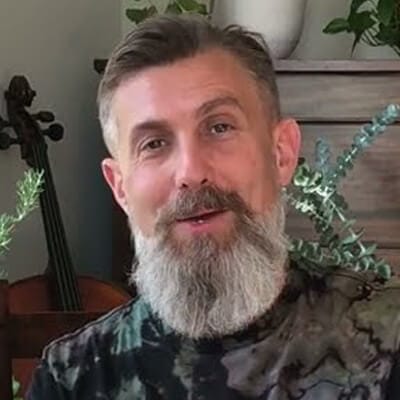
Born in London, Dr. Churchill's interest in psycho-spiritual development, Integral theory, Contemplative studies, Western Esotericism, and Mahayana Buddhism began in his adolescence, eventually leading him to spend several years as a Buddhist monk at Samye Ling Monastery in Scotland. During this time, John received the esoteric Planetary Dharma transmissions that would in time unfold as his contribution to a planetary fourth turning teaching. Dr. Churchill spent 15 years training and teaching “Great Seal” meditation in an Indo-Tibetan Mahayana lineage under the mentorship of the late senior Western teacher, translator, respected author, and clinical psychologist Dr. Daniel P. Brown.
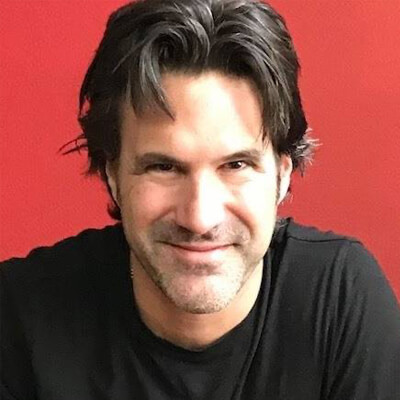
About Keith Martin-Smith
Keith Martin-Smith is an award-winning author, writing coach, and Zen priest. He is passionate about human connection, creativity, and evolution. His books include "The Mysterious Divination of Tea Leaves", "A Heart Blown Open", and "The Heart of Zen". His most recent book is his first novel, "Only Everything", a novel that explores the promise and the pain of following an artist's path.