

In this episode 27 chapters
- Two Necessary Conditions
Wilber introduces the book and Laloux's finding that only two things are required: a teal-minded CEO and a supportive board.
- Organizations as Conveyor Belts
Few people are at second tier, so leaders have to hold space for practices most staff don't share yet, and workplaces may now be the main engine of human development.
- Stages of Human Consciousness
Wilber walks through the developmental stages from archaic to integral.
- Wolf Pack to Family
A tour of organizational stages: red runs on fear, amber on formal roles, orange on the machine metaphor, and green on the family metaphor.
- From Fear to Trust
At teal, people step back from the ego, and fear gives way to trust and Maslow's 'being' needs.
- The Living Organism Metaphor
Drawing on Tami Simon and Margaret Wheatley, they look at organizations as living systems and introduce the three breakthroughs as an answer to widespread disengagement.
- The Buurtzorg Story
Dutch neighborhood nursing had been broken into stopwatch-timed tasks until Buurtzorg's self-managing teams brought back whole-person care.
- Coaches and Reverse Delegation
Buurtzorg runs 6,500 nurses with a 22-person headquarters, coaches who ask questions instead of giving orders, and staff functions that act only when teams ask.
- FAVI's Mini-Factories
A French gearbox maker beat Chinese competition by splitting into customer-focused teams that coordinate through quick volunteer stand-ups.
- AES and the Board's Fear
AES scaled self-management to 40,000 people, then reverted when a frightened board took control after 2001.
- Growth Hierarchies Return
Once dominator hierarchies are removed, natural hierarchies of skill and influence emerge.
- The Advice Process
Anyone can make any decision, including a capital purchase, once they have consulted the people affected and the experts.
- No Secrets
All information is open, including salaries and team productivity rankings.
- Conflict for the Soul
Organizations that had never heard of each other arrived at the same conflict steps: one-on-one, then a mediator, then a panel.
- Separating Role from Soul
People pick up and hand off granular roles organically, which keeps the organization adaptive.
- Setting Your Own Salary
Performance is measured by team, appraisals use competency models each team designs, and salaries are peer-based or self-set.
- Taking Off the Mask
The second breakthrough, wholeness, invites people to bring all of who they are to work.
- Paid to Grow?
Wilber asks whether these egalitarian cultures acknowledge growth hierarchies.
- Ground Rules for Safe Space
Teal organizations go beyond values slogans by spelling out specific behaviors that are encouraged or ruled out.
- Reflective Spaces and Stories
Quiet rooms, Heiligenfeld's cymbal practice, large-group reflection sessions and coaching weave inner work into daily work.
- Fewer, Better Meetings
Without layered hierarchies there are far fewer meetings, and those that remain use practices to keep egos in check.
- Hiring the Whole Person
These organizations ask what is right before what it will cost, and their decisions draw on intuition as well as reason.
- Purpose Without Competition
Evolutionary purpose does away with the idea of competitors, and profit follows purpose.
- Sensing and Responding
Anyone can sense a new direction and start it, while practices like the empty chair, Theory U and dropping budgets replace predict-and-control.
- Culture and the Four Quadrants
Culture has to be shaped through structures, role-modeling and leaders' own inner work.
- Holding Space at the Top
An organization cannot go beyond its leader's consciousness, so CEOs hold space and even give up unilateral power, as at Morningstar and under Holacracy.
- Boards, Transformation and Evolution
Boards chosen for expertise alone can undermine the model, and Laloux offers lessons for startups and for transforming existing organizations.
In this extraordinary 5-hour discussion, Frederic Laloux and Ken Wilber take an extensive tour through Frederic’s groundbreaking new book, Reinventing Organizations, which offers an in-depth look at many integrally-structured organizations that are beginning to emerge all across the planet, while outlining three major breakthroughs shared by these organizations: self-management, striving for wholeness, and listening to evolutionary purpose.
Reinventing Organizations sets itself apart from other organizational literature in its staggeringly comprehensive account of these organizations—describing how they work, how they are structured, how decisions are made, how meetings are run, etc. Whereas most other attempts to make sense of organizational development have been extrapolated from studies of individual development, this book represents the first real collection of research into the actual structural development of organizations that we’ve seen—offering a clear roadmap to help us evolve our own organizations to an integral level, detailing the unique structures, processes, and purpose that the most successful integral organizations utilize in their day to day operations.
“A spectacular treatise! This is truly pioneering work.”
–Ken Wilber, from the Foreword
“Richly researched—a stimulating and inspiring read!”
–Robert Kegan, Harvard University’s Meehan Professor of Adult Learning
“Impressive! Brilliant! This book is a world-changer”
–Jenny Wade, Ph.D., Author of Changes of Mind
Become a member to access the full episode
Start building your big picture mind & support the global emergence of Integral consciousness

“Integral Life is the most important and globally-relevant platform for the leading edge of Integral consciousness evolution”
– Eugene P.

About Frederic Laloux
Frederic Laloux is the author of Reinventing Organizations, and works as an adviser, coach, and facilitator for corporate leaders who feel called to explore fundamentally new ways of organizing.
About Ken Wilber
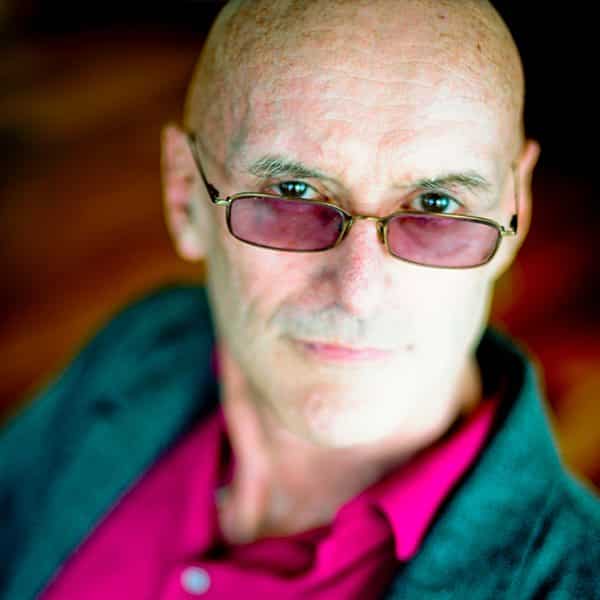
Ken Wilber is a preeminent scholar of the Integral stage of human development. He is an internationally acknowledged leader, founder of Integral Institute, and co-founder of Integral Life. Ken is the originator of arguably the first truly comprehensive or integrative world philosophy, aptly named “Integral Theory”.

Comments
I am currently involved with an online organization designed to help companies become more highly evolved and conscious. Having recently been certified by this organization, I am interested in starting my own consulting firm based on Integral Theory and using the three basic concepts (Wholeness, Evolutionary Purpose, and Self-Mangement) described by Federick Laloux.
This will be a for profit commercial enterprise and I the purpose of this comment to find out what appropriate permissions may be needed to pursue this line of business. I can be reached at dsherrill1@triad.rr.com or by phone at 336 499 4435,
Thanks in advance for any information or direction you can give me in regards to this.
David Sherrill