
What’s Really Driving You? The Hidden Psychology of High Performers

Dr. Keith WittCognitive, Intrapersonal, Perspectives, Psychology, Uncategorized, Video, Volitional, Witt & Wisdom: Live with Dr. Keith

Become a member to access the full episode

Start building your big picture mind & support the global emergence of Integral consciousness

“Integral Life is the most important and globally-relevant platform for the leading edge of Integral consciousness evolution

– Eugene P.

Learn about our membership

Perspective Shift:

  1. Every high achiever is compensating for something. The question is whether they know it. Compensatory motivation is the engine that runs on lack — the drive to achieve, perform, and produce not because it feels meaningful, but because some part of you believes that if you stop, something bad will happen. You’ll be exposed. You’ll fail. You won’t be enough. It’s not weakness — it’s adaptation. And it has produced some of the most remarkable achievements in human history. But there’s a ceiling on what fear can build.
  2. You can’t think your way out of a compensatory state. When anxiety hits, the instinct is to solve the problem, rehearse the conversation, manage the outcome. But that is the compensatory spiral tightening. The move is counterintuitive: slow down, name what you’re afraid of specifically, regard each fear with compassion rather than resistance — and then ask where your core values are pointing. The anxiety doesn’t need to disappear for you to act from integrity. It just needs to be seen.
  3. Compassionate self-observation isn’t a technique — it’s the engine beneath every change system that has ever worked. ACT therapy, Gestalt, Internal Family Systems, psychosynthesis, voice dialogue — strip away their different methods and you find the same mechanism: helping a person witness themselves with curiosity instead of judgment. Critical self-observation (“You idiot”) keeps you stuck. Compassionate self-observation (“Huh, that’s interesting — where did that come from?”) opens the door. This isn’t a feature of certain therapeutic approaches. It is the feature.
  4. Growing up is only half the journey — the other half is “growing down”. Every developmental transition gains something and leaves something behind, usually in shadow. The vivid, almost hallucinatory quality of childhood imagination. The raw aliveness of early emotional experience. The unguarded openness of pre-self-conscious belonging. A genuine developmental journey doesn’t only climb — it also circles back to recover what was left behind, and reclaims those gifts from the vantage point of a more mature self. The fruits of every stage are still available. None of it is ever truly lost.

What drives you — really? Beneath the deadlines you meet, the goals you chase, and the performances you deliver, there are two very different engines that might be running the show. In this month’s episode of Witt & Wisdom, Dr. Keith Witt introduces a new model of motivation he’s been developing with Australian researcher and executive coach Max Stephens — a framework that distinguishes between compensatory motivation (doing things to stabilize the ego, reduce anxiety, avoid failure, or earn belonging) and integrative motivation (acting from deep values, genuine meaning, and an evolving sense of self).

The model maps three interlocking dimensions: your underlying psychological structures, the nature of your goals, and the social environments you inhabit — each sitting somewhere on the spectrum between compensatory and integrative. Together, they offer a kind of motivational GPS: a way to locate where you actually are, and a direction for where you’re trying to go.

Crucially, this isn’t a framework that pathologizes fear-driven motivation. Compensatory drives have produced extraordinary human achievement — the “not good enough” engine has carried countless people to remarkable places. The real insight is subtler: compensatory and integrative motivations always coexist, they form a living polarity rather than a binary, and the invitation isn’t to eliminate one in favor of the other. It’s to observe both with compassion — and to notice the deeper integrative hunger that was always running beneath the surface. Keith situates this in conversation with Self-Determination Theory (Deci & Ryan), whose research demonstrated that human beings have innate drives toward autonomy, competence, and relatedness — and that extrinsic pressure can actually diminish intrinsic motivation, not just redirect it.

At the heart of the model are two universal mechanisms that Keith argues underlie every effective change system ever devised — from ACT therapy to Gestalt to Internal Family Systems: compassionate self-observation, and the productive self-awareness that flows from it. Whether you’re working with a therapist, a coach, or your own meditation cushion, the engine is the same: learning to witness yourself with curiosity instead of judgment, which opens the door to genuine flexibility and growth. Keith traces this capacity developmentally — from its earliest emergence in adolescence through the increasingly subtle “witnessing the witness” available at higher stages of consciousness — and offers interoception as a practical real-time tool: flow and felt alignment signal integrative motivation; anxiety, rehearsal, and the need to impress signal the compensatory.

The conversation deepens as Corey reflects on his own 23-year integral journey through this lens — tracing how lack-driven compensatory energy dominated his early career, rooted in childhood wounds and a hunger for belonging, and how that same energy carried him precisely to the place where integrative abundance could begin to flow. This opens into a broader reflection on the integral community itself: many people arrive at integral through post-traumatic growth, drawn to its vision of wholeness because they carry some deep wound or feeling of brokenness. The risk is when the wound overwhelms the wholeness; the opportunity is building containers strong enough to hold both. Keith and Corey also explore the importance of not just growing up through developmental stages, but also “growing down” — circling back to reclaim the gifts left behind at earlier levels of development, from the vivid imagination of childhood to the raw aliveness of early emotional experience.

The question isn’t whether compensatory motivation is running somewhere in your life. It almost certainly is. The question is whether you’re willing to look at it — and discover what’s been waiting underneath.


Previous Episodes of Witt & Wisdom

The Sword and the Lotus: Sacred Masculinity in a Time of Metacrisis

The Sword and the Lotus: Sacred Masculinity in a Time of Metacrisis

Keith Witt and Corey de Vos clarify masculine and feminine as energetic polarities (not gender), showing how sexuality, psychotherapy, and culture all hinge on whether power is expressed as domination or as disciplined, heart-led discernment. From collective trauma and “weaponized ambiguity” to the Manjushri “flaming sword” of clear seeing, they argue that what changes people—and societies—isn’t outrage, but compassion and wisdom strong enough to protect what’s true.
The Four Pillars of Good Therapy

The Four Pillars of Good Therapy

Corey and Dr. Keith Witt kick off the new year by returning to first principles: what makes therapy genuinely effective, and how an integral view of consciousness reframes the whole endeavor. Keith lays out his four foundations of healthy psychotherapy—clear boundaries, feeling deeply understood, making skillful observations and connections, and shifting from drama into problem-solving—while exploring how the “wise self” and the therapeutic relationship container can support healing, development, and a re-enchanted sense of meaning.
Bayesian Psychology: Your Brain Is a Lying Prophet

Bayesian Psychology: Your Brain Is a Lying Prophet

This episode explores how our brains operate as prediction engines, using unconscious mental models to interpret reality — and how those models shape our relationships, identity, and capacity for growth. Drawing from psychotherapy, neuroscience, and integral theory, Dr. Keith Witt and Corey deVos examine how transformation happens when our models break down, and how love, safety, and perspective-taking create the conditions for real psychological and spiritual evolution.
Cybernetics and the Intelligence of Love

Cybernetics and the Intelligence of Love

Dr. Keith Witt and Corey deVos explore how cybernetics — the science of self-correcting systems — reveals the hidden logic of love, power, trauma, and societal evolution. Through the lens of integral theory, they trace feedback loops across all dimensions of life, showing how everything from personal healing to political dysfunction is shaped by the quality of communication and coherence in our systems.
The Dopamine Revolution: From Human Evolution to Modern Crisis

The Dopamine Revolution: From Human Evolution to Modern Crisis

Dr. Keith Witt traces how dopamine-driven evolution shaped human consciousness from ancient seafood consumption that triggered civilization's "Big Bang" 80,000 years ago to today's hyper-stimulating culture that exploits the same neurochemical reward systems for profit. While our dopamine-flooded modern world creates unprecedented pathologies like addiction and isolation, it also sets the stage for the next evolutionary leap: conscious integration of our reward systems with relational wisdom and ecological awareness.
The Magic Mirror: How AI Is Reshaping Your Mind

The Magic Mirror: How AI Is Reshaping Your Mind

Keith and Corey examine AI’s cognitive, relational, cultural, and developmental impacts — highlighting both the dangers of projection, offloading, and disembodiment, and the opportunities to use AI as a practice partner for discernment, shadow integration, and growth. Corey then showcases some of the new AI tools now available to all Core Members of Integral Life.
Everything Is Relationships: The Hidden Force That Shapes Reality

Everything Is Relationships: The Hidden Force That Shapes Reality

Human beings are always in relationship — with ourselves, with others, and with the larger cultures we create together. In this episode, Dr. Keith Witt and Corey deVos explore how the quality of these relationships shapes not only our personal growth, but our experience and perception of reality itself.
Between Two Infinities: What Does It Mean to Live a Good Life?

Between Two Infinities: What Does It Mean to Live a Good Life?

What does it really mean to live a good life—and how does that meaning evolve as we grow? In this candid and illuminating conversation, Dr. Keith Witt and Corey deVos explore how progress on meaningful needs, conscious relationships, and a deeper sense of purpose all contribute to a life well-lived.
Every Scar Has a Story: Rewriting the Narratives That Shape Us

Every Scar Has a Story: Rewriting the Narratives That Shape Us

Dr. Keith Witt and Corey deVos explore how trauma shapes the stories we tell about ourselves — and how those stories can be transformed into resilience, wisdom, and self-leadership. Drawing from developmental theory, the Enneagram, and decades of clinical experience, Keith offers a four-stage model of trauma healing rooted in radical acceptance, narrative re-patterning, and the cultivation of a compassionate “wise self.”
The Turquoise Dialectic: Expand Your Cosmology Through Integral Dialogue

The Turquoise Dialectic: Expand Your Cosmology Through Integral Dialogue

Corey DeVos and Dr. Keith Witt explore the turquoise dialectic—a mode of deep, integrative conversation where perspectives evolve rather than compete—touching on themes of honesty, trust, intergenerational transmission, and the ways our personal cosmologies shape reality. From the psychology of deception to the ancestral patterns we unconsciously carry, this discussion invites listeners to examine how they construct meaning, engage in dialogue, and participate in the ongoing evolution of consciousness.
Transform Your Motivation System

Transform Your Motivation System

Why do so many high achievers feel like they’re never enough, no matter how much they accomplish? In this episode, Dr. Keith Witt and Corey deVos explore the hidden meta-motivation systems that drive us — sometimes to greatness, but often to exhaustion.
Exploring Teal and Turquoise Psychotherapy

Exploring Teal and Turquoise Psychotherapy

This discussion unpacks the essence of integral psychotherapy, exploring how Teal and Turquoise approaches integrate all psychologies into a dynamic framework that optimizes healing and growth. With practical insights into productive self-awareness, the role of spirituality, and the interplay of life’s processes, Corey and Keith illuminate the path toward deeper wholeness and transformative relationships.
Escaping the Drama Triangle: Presence, Problem-Solving, and Relational Mastery

Escaping the Drama Triangle: Presence, Problem-Solving, and Relational Mastery

Corey deVos and Dr. Keith Witt explore one of the most common yet misunderstood aspects of human interaction: the tension between drama and problem-solving. They dive deeply into the "Drama Triangle," a psychological framework that reveals how the roles of victim, rescuer, and persecutor trap us in cycles of dysfunction. These dynamics, while often personal, are also embedded in cultural systems, politics, and even therapy itself.
Sexual Healing: A Beginner’s Guide to Integral Sex Therapy

Sexual Healing: A Beginner’s Guide to Integral Sex Therapy

Dr. Keith Witt and Corey deVos explore the transformative world of integrally informed sex therapy—a holistic approach that combines romantic, scientific, and spiritual perspectives to address the unique complexities of modern relationships. This episode offers profound insights into creating and sustaining a fulfilling, dynamic love affair that extends beyond physical intimacy, tailored to the unique needs of every relationship.
The Integration of Defenses

The Integration of Defenses

How can we become more aware of our defensive reactions as they arise? Dr. Keith Witt and Corey deVos explore the intricate world of psychological defenses, presenting them as a critical line of intelligence and development. Dr. Witt introduces his pioneering concept of an "integration of defenses" as a developmental line, illustrating how our defensive mechanisms evolve and manifest across various stages of growth.
The 8 Horizons of Love

The 8 Horizons of Love

In this episode of Witt and Wisdom, Corey deVos introduces a comprehensive relationships framework he is currently developing, designed to help partners navigate the staggering complexity of our relationships — whether romantic, familial, or platonic. Corey highlights the eight fundamental territories or horizons within which all relationships unfold, detailing the common factors, everyday examples, key questions, common challenges, and the risks of neglecting each of these horizons.
The Many Within: Understanding IFS and Self Integration

The Many Within: Understanding IFS and Self Integration

Dr. Keith Witt and Corey deVos discuss Internal Family Systems (IFS) therapy, an approach developed by Richard Schwartz in the 1980s that recognizes the multiplicity of the human psyche. IFS works with the different parts of the personality to promote psychological health, wholeness, and ongoing development.
The Art of Integral Conversation: How to Have a Turquoise Dialectic

The Art of Integral Conversation: How to Have a Turquoise Dialectic

Dr. Keith Witt and Corey deVos explore the concept of "turquoise dialectic" - a sophisticated form of integral discourse that emerges at the later stages of human development. Drawing upon their deep understanding of adult development and integral theory, they explore the feeling and transformative potential of the turquoise “we-space”, and how we might create the conditions for this type of conversation to unfold.
CANCELLED: The Battle for Free Speech in the Integral Age

CANCELLED: The Battle for Free Speech in the Integral Age

Keith Witt and Corey delve into the complex and contentious issue of cancel culture, examining its implications for free speech, academic freedom, and social cohesion. They explore why understanding the nuances of cancel culture is crucial in today's polarized environment, and how an Integral perspective can provide a more comprehensive view that embraces complexity, encourages growth, and seeks balance.
The Psychology of Splitting

The Psychology of Splitting

Watch as Dr. Keith and Corey explore the psychological process of splitting, revealing how awareness and regulation of these processes can lead to a more health and healing, as well as to a more integrated and resilient self. By acknowledging the nuanced nature of our emotional responses and learning to navigate them with compassion and mindfulness, we open the door to deeper self-understanding and more harmonious relationships with others.
From the Cambrian Explosion to the Human Explosion

From the Cambrian Explosion to the Human Explosion

Dr. Keith and Corey explore the parallels and differences between the Cambrian explosion and the rapid evolution of human consciousness, discussing the profound impacts of technological and cultural advancements on our collective development.

Become a member to access the full episode

Start building your big picture mind & support the global emergence of Integral consciousness

“Integral Life is the most important and globally-relevant platform for the leading edge of Integral consciousness evolution”

– Eugene P.
Learn about our membership
Transcript:

Dr. Keith Witt: I think peanuts are blue.
Corey: Well that’s weird.

About Keith Witt

Dr. Keith Witt is a Licensed Psychologist, teacher, and author who has lived and worked in Santa Barbara, CA. for over forty years. Dr. Witt is also the founder of The School of Love.
About Corey deVos

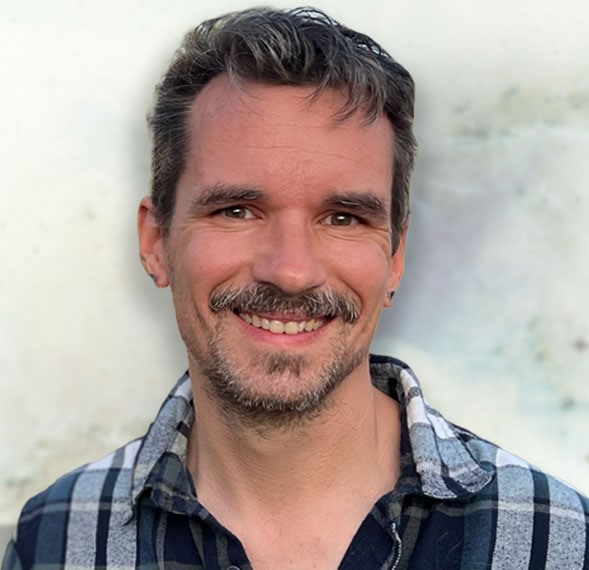
Corey W. deVos is editor and producer of Integral Life. He has worked for Integral Institute/Integal Life since Spring of 2003, and has been a student of integral theory and practice since 1996. Corey is also a professional woodworker, and many of his artworks can be found in his VisionLogix art gallery.