


In this episode 10 chapters
- Four Layers of Broken Journalism
Corey presents Stefan's work as the first integral approach to media literacy.
- Dancing Journalism
Stefan describes a U-Lab process that paired data with embodied systems constellations, and the prototypes that came out of it: news conferences open to non-journalists and 'reality tunnel training'…
- The Poker Game of Discourse
Stefan's map nests journalism inside the infosphere, and the infosphere inside society.
- Attention, Gen Z, and New Shells
Stefan disputes the idea that attention spans are collapsing, pointing to Gen Z's appetite for long-form content.
- The Overlooked Umber Stage
Stefan shows the healthy and harmful contributions each stage makes to the infosphere.
- The Ideal Newsroom
Stefan imagines a newsroom where each stage adds its strength, from togetherness to synthesis, and lists each stage's distortion, from fake news to green false balance.
- Flatland, Swampland, and Zones
Stefan contrasts orange 'flatland' journalism with green 'swampland' journalism and argues that teal can integrate facts with interpretation.
- Roots Out of Your Buttocks
Stefan recalls his editors laughing at the grounding meditations in his psilocybin coaching story.
- How Clean Is the Water
Stefan sets out what makes information in the infosphere good quality.
- From Convening to Transforming
Stefan maps what holds people together, and what pulls them apart, at each stage.
Start building your big picture mind & support the global emergence of Integral consciousness “Integral Life is the most important and globally-relevant platform for the leading edge of Integral consciousness evolution” – Eugene P.
Become a member to access the full episode

In this wide-ranging discussion, Corey deVos talks to Stefan Schultz, a journalist at Der Spiegel magazine, about his model for integral journalism that he has been developing over the past few years. This model, staggering in both its depth and its breadth, examines journalism and media literacy through a developmental lens, looking at how the infosphere shapes society and how journalism can positively influence this process.
Stefan outlines the four key problem areas he sees in journalism today: frustration among reporters, dissatisfaction in audiences due to lack of perspectives/empathy/positivity in coverage, challenges for media companies in retaining subscribers, and polarization in society. To address these systemic issues, Stefan convened an interdisciplinary team to examine the problem from all angles and prototype solutions. He views journalism as one part of a larger ecosystem that also includes both the infosphere and society, where every developmental stage, from Amber to Teal, has beneficial and detrimental impacts on this ecosystem. The goal is to amplify the positive contributions of each stage while minimizing the negatives — for example, having journalists at different stages collaborate: Amber focuses on group cohesion, Orange on investigation, Green on empathy, Teal on synthesis, etc.
Ultimately, integral journalism aims to facilitate development by exposing people to more complex information, healthier discourse, and inspiration for transformation. While the infosphere has become decentralized and overwhelming, journalists can still act as “beacons” to promote greater wisdom and maturity in public dialogue. The integral model provides a roadmap for how journalism can evolve to better meet the needs of a complex world.
Chapter Timecodes
(00:00:00) Introduction and Catching Up
(00:03:48) The Four Key Problem Areas in Journalism
(00:11:18) The U-Lab Process: Rational and Intuitive Approaches
(00:24:33) The Metasystemic Map: Journalism’s Ecological Hierarchy
(00:29:07) The Evolution of the Infosphere
(00:29:07) The Evolutionary Stages of Journalism and
(00:35:06) The Shrinking Influence of Journalism
(00:42:05) Reinventing Journalism in the Social Media Age
(00:47:52) The Big Map: Journalism, Infosphere, and Society
(00:50:42) The Umber Stage: Bridging Amber and Orange
(01:02:58) Beneficial and Detrimental Contributions of Each Stage
(01:06:41) The Good, Bad, and Ugly of Green
(01:14:10) Zones of Perspective and Cross-Level Communication
(01:26:08) The Role of Journalism in the Infosphere
(01:39:55) Glue and Solvent: What Holds Society Together
(01:49:17) Conclusion and Future Directions
Related Media
Integral Journalism in the Disinformation Age
Stefan Schultz and Corey deVos
Stefan Schultz is a journalist for Der Spiegel magazine since 2008, and a student of integral theory since 2018. In this fun and far-ranging discussion, Corey deVos talks to Stefan about his own integral approach to journalism, taking a careful look at the primary methods and motivations of journalism we see at each major stage of development. They then go on to suggest what a more integral form of journalism might look like, while also exploring a number of related topics — the role of art and aesthetics in journalism, the distinction between orthodox and heterodox sources of information, the collapse of legitimacy in our media institutions, and much more.
Become a member to access the full episode
Start building your big picture mind & support the global emergence of Integral consciousness
“Integral Life is the most important and globally-relevant platform for the leading edge of Integral consciousness evolution”
– Eugene P.

About Stefan Schultz
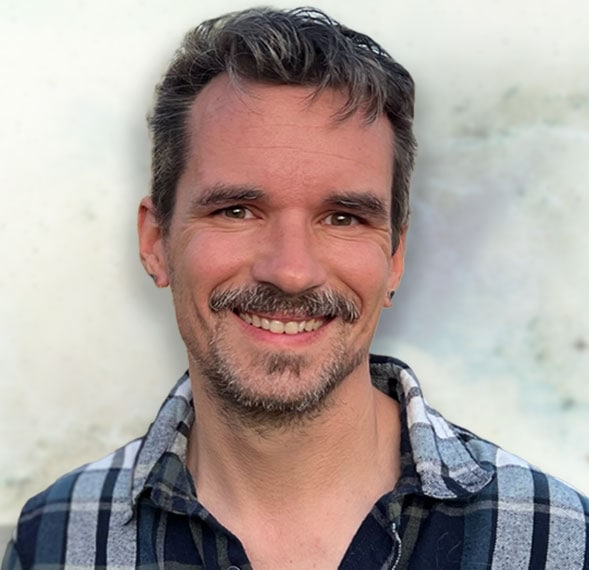
Stefan Schultz is a journalist at Der Spiegel magazine. He is a former correspondent in San Francisco, New York and Beijing, and has done reporting and analyses from all over the world. He is a business editor with priorities on energy transition, digitalization, and China. Stefan is the author of several books, and a lecturer in multimedia storytelling. He is winner of the Ernst Schneider Prize and the Georg Holtzbrinck Prize. Stefan has been an integral student and practitioner since 2018, and lives in Germany with his wife and two sons.
Stefan studied media culture, politics and British literature in Hamburg and Lisbon (M.A.), and has done freelance work at "Hamburger Abendblatt", "Prinz", and the Portuguese daily newspaper "24 Horas". Development editor and cross-media representative for the print and TV edition of "Deutschland International".
About Corey deVos
Corey W. deVos is editor and producer of Integral Life. He has worked for Integral Institute/Integal Life since Spring of 2003, and has been a student of integral theory and practice since 1996. Corey is also a professional woodworker, and many of his artworks can be found in his VisionLogix art gallery.
