

👉 Listen on the go! Click here to find this episode on Spotify.
Perspective Shift:
- The “sacred gap” is simultaneously the source of human suffering and human freedom. Animals don’t have the distance between experience and reflection that we do — which means they also can’t get stuck in their pain the way we can. But that same gap is what allows us to find meaning, grow, and transform. Our greatest vulnerability and our greatest gift are the same thing.
- Shadow is not a malfunction, it’s an act of evolutionary wisdom. Your psyche doesn’t repress trauma because it’s broken. It hides what you can’t yet digest precisely so you can digest it later, when you have more capacity, more tools, more life experience. The shadow isn’t your enemy. It’s a holding space that your deeper intelligence created on your behalf.
- You have to become a victim before you can stop being one. Skipping the genuine acknowledgment that something unjust happened to you — that it wasn’t your fault, that it shaped you in real ways — isn’t transcendence. It’s bypass. The path through requires fully inhabiting the truth of what occurred before you can release your identification with it.
- The post-tragic is not the pre-tragic restored. Most of us unconsciously aim for a return to innocence — to get back to before the wound. But the genuine destination is something that could only be reached through the wound. Post-tragic wholeness isn’t innocence recovered. It’s a kind of unbreakable openness that includes the tragedy rather than erasing it.
- Art and comedy aren’t distractions from suffering, they’re vehicles for metabolizing it. Real art brings you close enough to tragedy to feel it, but also close enough to beauty and meaning to keep your heart open; humor can be a sacred instrument for digesting what would otherwise overwhelm.
What makes human suffering so different from anything else in the animal kingdom? And what makes it so potentially transformative?
In this deeply moving episode, Keith Martin-Smith sits down with developmental coach, acupuncturist, and shadow work facilitator Alexander Love to explore the foundational architecture of the human psyche — how shadow is formed, why it has to be, and what becomes possible when we learn to work with it rather than around it.
Alexander introduces the concept of the sacred gap — the uniquely human capacity to stand apart from our own experience and reflect on it. It is this gap, he argues, that makes both profound wounding and profound healing possible. Without it, we cannot repress, bypass, or project. But without it, we also cannot grow, integrate, or find meaning in our most difficult experiences.
Drawing on his framework of evolution’s engine and the five evolutionary gestures, Alexander draws inspiration from Kim Barta’s work and developmental theory, mapping how the shadow vehicle is constructed across the first four waves of human development — from the fluid receptivity of infancy, through the raw fire of early childhood, into the increasingly sophisticated systems of protection and repression that emerge as we mature. Each developmental wave contributes a new mechanism: introjection, projection, the inner family of parts, and finally the deep metal-like capacity for repression that allows us to wall off what we cannot yet face.
But this is not merely theoretical. Alexander speaks with hard-won personal authority. In 1998, his father was murdered — a shattering event that initially sent him toward spiritual bypass before eventually opening into decades of genuine integration. He shares the remarkable story of his ongoing relationship with Herbert, the man who took his father’s life, describing a friendship that has deepened through restorative justice dialogues scheduled each year on the anniversary of the murder. It is a living example of what Alexander calls the post-tragic — not a place where tragedy is overcome or left behind, but where it is embraced so fully from a place of wholeness that something genuinely new becomes possible.
This conversation is for anyone who has ever sensed that their deepest wounds might also be their deepest teachers — and wondered how to actually make that true.
Go Deeper with Alexander Love: The Lumina Process Level I
If this conversation stirred something in you — a recognition of patterns you can see but can’t quite shift, or a sense that your pain has been trying to teach you something you haven’t fully received yet — Alexander has created something you’ll want to explore.
The Lumina Process is Alexander’s embodied, developmentally-informed approach to shadow work, weaving together the insights you heard in this episode — the shadow vehicle, the inner family of parts, the post-tragic orientation — into a living, experiential practice. This isn’t just theory. It’s a precise method for making contact with the hidden patterns shaping your reactions and relationships, and transforming them into genuine wisdom.
In Lumina Process Level I, you’ll move through a three-month cohort experience that takes you deep into parts work and shadow resolution in a way that meets you exactly where you are — integrating the full spectrum of cleaning up, waking up, showing up, and growing up. Coaches can also earn ICF Continuing Education credits.
Not ready to commit? Alexander has also created a free mini-course that gives you a real taste of the Lumina Process and the key distinctions that support the journey from fragmentation to wholeness. We think it’s a beautiful place to start.
Alexander is a dear friend and colleague, and watching him work is a privilege. We hope you’ll take him up on this.
Click here for the free mini-course
Click here to enroll in Lumina Process Level 1
 Key Questions
Here are some questions you can contemplate while listening to this discussion. We suggest you take some time to use these as journaling prompts.
- What is the defining tragedy or wound of my life — the experience that most shaped who I became? Have I fully allowed myself to feel the grief and injustice of it, or have I moved toward meaning before fully inhabiting the loss?
- Can I notice right now the space between my experience and my awareness of it — the observer watching the observed? What becomes possible when I rest in that gap rather than collapsing into what I’m feeling?
- What did the significant adults in my early life communicate — explicitly or implicitly — about who I was supposed to be? Which of those messages am I still living out, and which ones were never actually mine to carry?
- Who in my life consistently triggers a strong emotional charge in me — admiration or contempt, idealization or blame? What might that charge be revealing about something I’ve disowned in myself?
- What are my most reliable strategies for not feeling what I don’t want to feel? How long have I been using them, and what were they originally protecting me from?
- What parts of myself have I exiled — qualities, emotions, desires, or ways of being — because they once felt too dangerous, too shameful, or too much to hold? What would it mean to let them back in?
- Have I ever used spiritual practice, positive thinking, or personal development as a sophisticated way of not feeling something? What was I trying to get above or around — and is it still waiting for me?
- What is the difference, in my own experience, between genuine peace and the performance of peace? Can I feel that distinction in my body right now?
- What would it mean to stop trying to get back to who I was before my most difficult experiences — and instead ask who I might become because of them?
About Integral Edge

Welcome to a world on the edge.
AI is rewriting the rules. Politics are more polarized than ever, with the far right and left in an endless clash. The metacrisis looms, late-stage capitalism is unraveling, DEI is evolving, and strongmen are rising once more.
But that’s just the beginning.
This podcast takes an integral look at the forces shaping our reality—from cutting-edge neuroscience and biohacking to cryptocurrency, global economics, and the ancient wisdom of awakening, mindfulness, and embodiment.
Keith Martin-Smith brings a deep, multi-perspective lens to the chaos, cutting through the noise to find what actually matters.
This isn’t just another commentary on the world. It’s a guide to seeing—and living—beyond the divide.
New episodes of Integral Edge every second and fourth Wednesday of the month at 10 AM PT. See our events calendar to join the live discussion!
Previous Episodes of Integral Edge









Become a member to access the full episode
Start building your big picture mind & support the global emergence of Integral consciousness

“Integral Life is the most important and globally-relevant platform for the leading edge of Integral consciousness evolution”
– Eugene P.
About Alexander Love
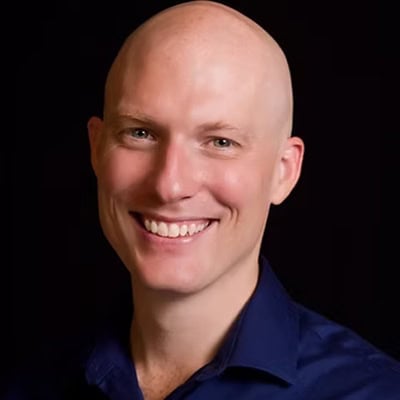
Alexander M. Love, M.Ac., PCC, is an internationally renowned facilitator, developmental coach, and acupuncturist. He is the creator of the Lumina Process, a coaching modality that parts work, eastern wisdom, and polarity work into a model of practice which evokes deep-seated transformation. Alexander is senior faculty at the Newfield Network and facilitates Newfield’s US coach training, their advanced training in Chile, and has created several on-demand courses. Alexander is a leading voice in defining the coaching field in this era. He emphasizes wholeness and is a leader in supporting humanity to access and live from our brilliant human potential.
About Keith Martin-Smith
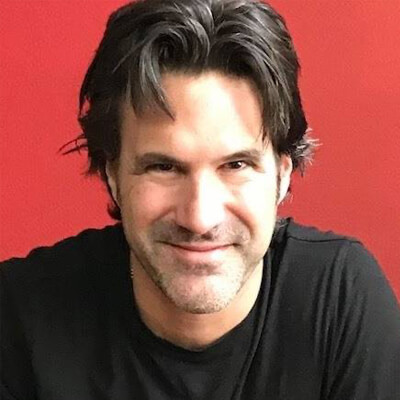
Keith Martin-Smith is an award-winning author, writing coach, and Zen priest. He is passionate about human connection, creativity, and evolution. His books include "The Mysterious Divination of Tea Leaves", "A Heart Blown Open", and "The Heart of Zen". His most recent book is his first novel, "Only Everything", a novel that explores the promise and the pain of following an artist's path.