
Taking Back the Bible from Fundamentalists & Frauds

Taking Back the Bible from Fundamentalists & Frauds

Comedian and author John Fugelsang separates what Jesus actually taught from what Christian nationalism preaches, and makes the case that hate has always found a home in religion without ever being its point. In this two-part conversation, he explains why fundamentalists of every faith have more in common with each other than with their own moderates, and how to reclaim a faith built on love, humility, and service.

The Wise Self

The Wise Self

Dr. Keith Witt and Corey deVos explore the wise self as three practices held together: compassion, moral discernment, and living your values. From everyday habits to our hardest disagreements, they ask how wisdom takes shape in each moment—and how to find your way back when you lose it.
Strength with Heart

Strength with Heart

Keith Martin-Smith gives a quick history of the men's movement, from Robert Bly and the Mankind Project, through David Deida, to today's teachers working with the body and the nervous system. Then he walks through the nine guideposts at the heart of Strength with Heart, the book he wrote with psychologists Daniel Ellenberg and Fred Rabinowitz.
Transmuting Life’s Tragedies: Embracing a Post-Tragic Perspective

Transmuting Life’s Tragedies: Embracing a Post-Tragic Perspective

Alexander Love once sat down with the man who murdered his father, and found an infinite degree of forgiveness available. From that ground he maps the post-tragic — not a stage you reach, but a dimension of being that isn't broken, from which pain can be related to rather than resolved.
Suicidal Empathy

Suicidal Empathy

“Suicidal empathy” has become a popular diagnosis of progressive excess: the idea that compassion can become so indiscriminate that it undermines the very people, institutions, and cultures it hopes to protect. In this episode, integral psychologist Dr. Keith Witt and Corey deVos take that critique seriously without accepting the Manichaean worldview often wrapped around it.
What AI Is Asking Of Us

What AI Is Asking Of Us

Robert McNaughton is an engineer by training who went to Naropa for music and contemplative psychology, and has followed AI for more than twenty years from two seats at once — cognitive science and contemplative practice. He and Keith Martin-Smith work through what right relationship with a technology nobody designed actually asks of us: the risks worth naming precisely, the ones we invent when we are frightened, and the human capacities that just became the scarce resource.
The Many Ways We Grow

The Many Ways We Grow

Ken Wilber and Corey deVos offer a guided tour through the many kinds of growing up, helping us understand development not as a single ladder we ascend over time, but as an entire psychograph of different intelligences, capacities, and gifts. Whereas most developmental models focus on a single line unfolding through multiple stages, integral accounts for all of these different lines — cognitive, morals, needs, values, and a dozen others, each growing at their own pace.
The Two Moral Minds

The Two Moral Minds

Integral psychologist Dr. Keith Witt and Corey deVos explore the moral operating systems running underneath every judgment you make — the reflexive system you were born with, the discriminative system almost no one uses, and the eighty thousand years it took for moral authority to move from the tribe, to the temple, to the inner chambers of your own heart.
When Reality Breaks

When Reality Breaks

Developmental psychologist Kimberley Teresa Lafferty and lifelong “experiencer” Robin Lassiter explore what UFO disclosure asks of us on the inside — ontological shock, discernment, and the descent into the body — and why no one should have to move through a broken reality alone.
Polarities in Psychotherapy

Polarities in Psychotherapy

What if the tension between freedom and responsibility, hope and realism, or grief and gratitude isn't a problem to fix, but a polarity to navigate? Dr. Keith Witt and Corey deVos reveal how polarity thinking reshapes psychotherapy, spiritual practice, and even our most divisive political debates.
Waking Up Was the Easy Part

Waking Up Was the Easy Part

Zen priest and former psychotherapist Chad Bennett joins Keith Martin-Smith to challenge a seductive spiritual myth: that waking up deeply enough will fix everything else. Together they explore why awakening, growing, and healing have to be practiced as a single braid — and why enlightenment, on its own, never cleans up after you
Holy Fools: The Enneagram Beyond Personality

Holy Fools: The Enneagram Beyond Personality

Dr. Keith Witt, Corey DeVos, and special guest Nomali Perera explore the Enneagram as a living map of the soul — tracing its contemplative origins, unpacking its architecture, and sharing their own vulnerable stories of mistyping and self-discovery. The conversation goes beyond type-finding toward something rarer: learning to see through your personality without throwing it away, and discovering the "holy fool" waiting on the other side.
The Sacred Gap: Shadow, Trauma, and the Post-Tragic Life

The Sacred Gap: Shadow, Trauma, and the Post-Tragic Life

What if the parts of you that hide, protect, repress, and deflect aren't signs of brokenness — but the marks of an intelligence that has been quietly safeguarding your deepest wounds until you were ready to meet them? In this conversation, developmental coach and shadow work facilitator Alexander Love maps the evolutionary architecture of the human psyche, weaving together cutting-edge developmental theory, Eastern wisdom, and his own extraordinary journey toward friendship with the man who murdered his father.
Synthesis Isn’t the Middle: Exploring the Faces of Free Speech

Synthesis Isn’t the Middle: Exploring the Faces of Free Speech

Corey deVos and Stephanie Lepp unpack Stephanie’s Faces of Free Speech—a short-form installation featuring Destiny (Steven Bonnell) performing multiple perspectives on the free speech polarity—then trace why “more speech” only works as a remedy inside healthy information ecosystems. Along the way, they clarify why synthesis isn’t centrist compromise but a sharp integration of the healthiest expressions of opposing poles, and Corey tests the piece through an Integral Life “debate analyzer” prototype that maps polarity, developmental framing, and pathways toward deeper sensemaking.
Why Eating Got So Hard (It’s Not Your Fault)

Why Eating Got So Hard (It’s Not Your Fault)

This episode dives into how to eat sanely and joyfully in a “Food 2.0” world engineered for overeating—using Jeff Siegel’s story of anorexia, his “inner eaters” model, and an Integral lens to end the civil war between mind and body. Together we explore how biology, psychology, culture, systems, and even GLP-1 drugs like Ozempic all shape your plate—and how to reclaim a flexible, wise, and genuinely nourishing relationship with food.
Three Faces of Bypassing: Spiritual, Developmental, and Shadow

Three Faces of Bypassing: Spiritual, Developmental, and Shadow

Many of us do deep inner work and still find ourselves stuck, exhausted, or strangely unchanged. This conversation explores why — revealing how spiritual, developmental, and shadow work can quietly turn into forms of bypassing, and what helps growth become integrated and alive again.
Growing Beyond Conflict: The Power of Polarity Thinking

Growing Beyond Conflict: The Power of Polarity Thinking

Barry Johnson and Beena Sharma offer a clear, fast-paced masterclass on polarity wisdom—what polarities are, why they matter, and how to pursue the upsides of interdependent opposites (not by choosing either/or, and not by settling for vague both/and, but by integrating both). Along the way, they ground polarity thinking in a deeper spiritual view and show how our relationship to polarities shifts with developmental maturity, applying the lens to real-world tensions like justice/mercy, claiming power/sharing power, and being/doing across democracy, social change, and inner practice.
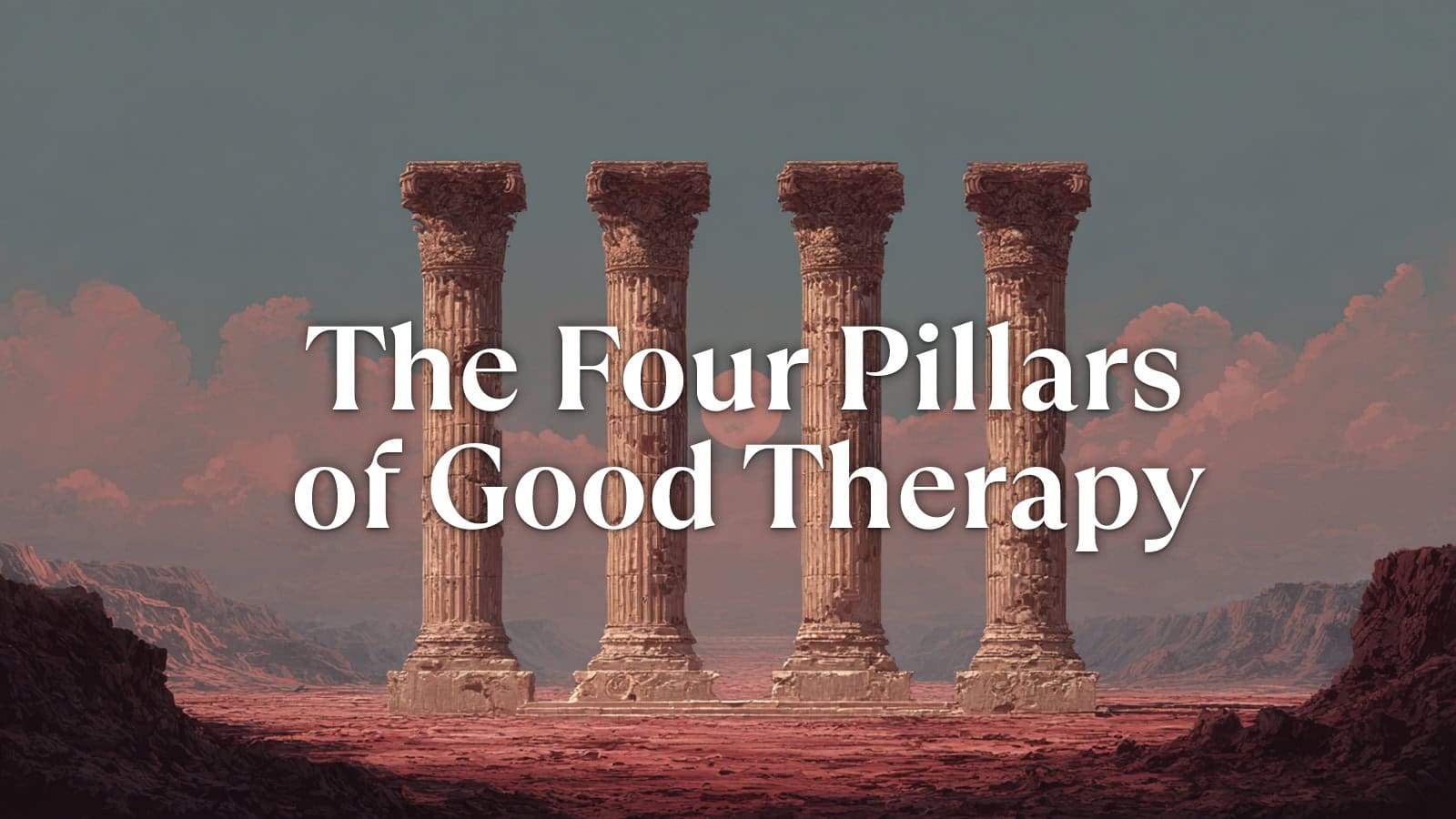
The Four Pillars of Good Therapy

The Four Pillars of Good Therapy

Corey and Dr. Keith Witt kick off the new year by returning to first principles: what makes therapy genuinely effective, and how an integral view of consciousness reframes the whole endeavor. Keith lays out his four foundations of healthy psychotherapy—clear boundaries, feeling deeply understood, making skillful observations and connections, and shifting from drama into problem-solving—while exploring how the “wise self” and the therapeutic relationship container can support healing, development, and a re-enchanted sense of meaning.
How to Build a Life Worth Living

How to Build a Life Worth Living

Keith Martin Smith and David Arrell diagnose the modern meaning crisis as a cultural imbalance: we’re overtrained in attainment (status, optimization, external validation) and undertrained in attunement (presence, depth, emotional regulation, and real connection), leaving many people “adrift” in a sea of stimulation and “infobesity.” They offer a practical path out—post-tragic devotion, the shift from reacting to responding, and a values → vision → action “life audit”—and invite listeners who want structure and community to join their live Attunement training.
Bayesian Psychology: Your Brain Is a Lying Prophet

Bayesian Psychology: Your Brain Is a Lying Prophet

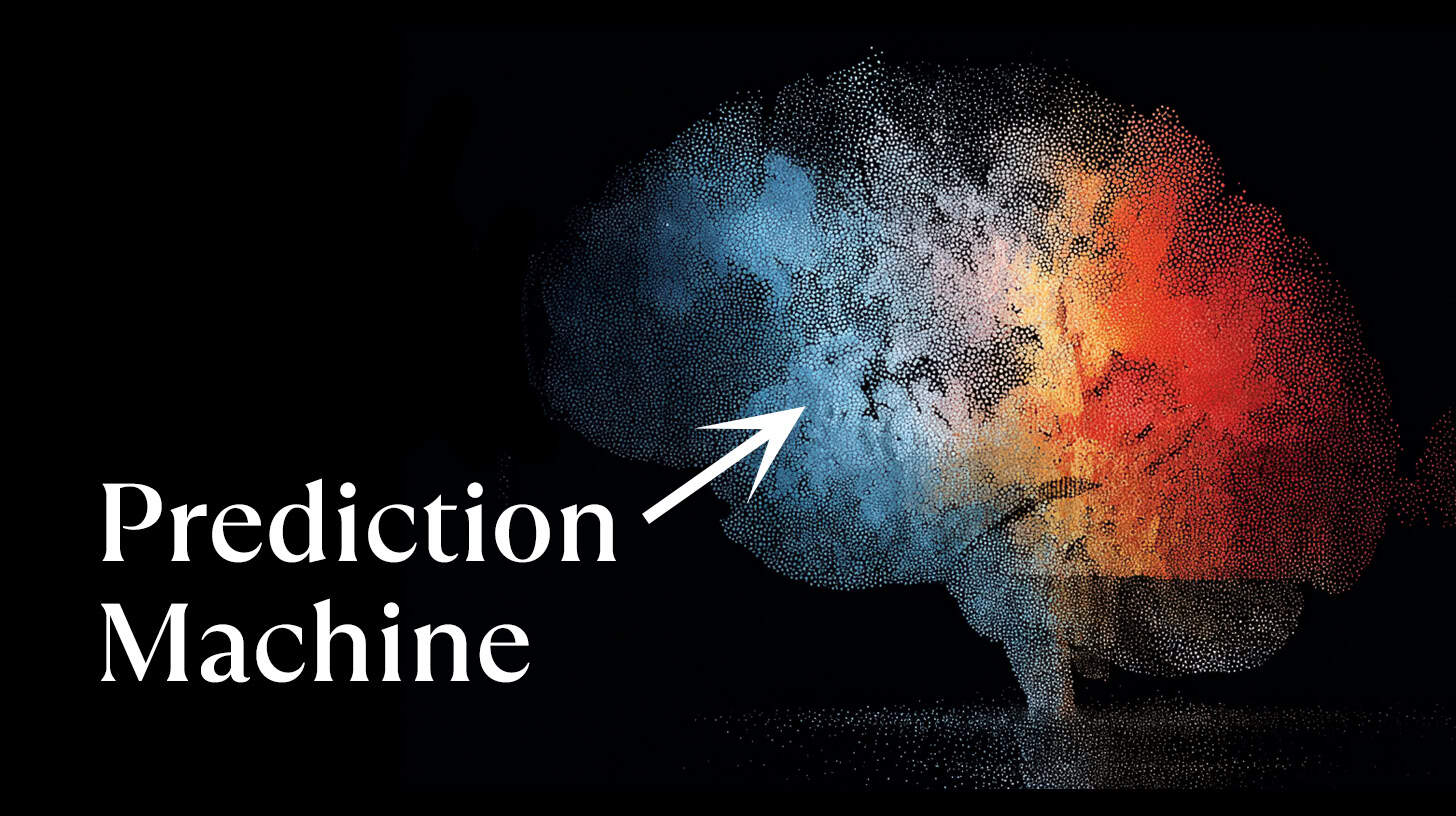
This episode explores how our brains operate as prediction engines, using unconscious mental models to interpret reality — and how those models shape our relationships, identity, and capacity for growth. Drawing from psychotherapy, neuroscience, and integral theory, Dr. Keith Witt and Corey deVos examine how transformation happens when our models break down, and how love, safety, and perspective-taking create the conditions for real psychological and spiritual evolution.
Tantra Is Not What You Think (And Way Better Than You Imagined)

Tantra Is Not What You Think (And Way Better Than You Imagined)

Two accomplished tantric practitioners — one from Kashmir Shaivism, the other from Tibetan Vajrayana — share their profound awakening stories and reveal how ancient consciousness technologies can accelerate the challenging transition from teal to turquoise awareness and beyond.
The Magic Mirror: How AI Is Reshaping Your Mind

The Magic Mirror: How AI Is Reshaping Your Mind

Keith and Corey examine AI’s cognitive, relational, cultural, and developmental impacts — highlighting both the dangers of projection, offloading, and disembodiment, and the opportunities to use AI as a practice partner for discernment, shadow integration, and growth. Corey then showcases some of the new AI tools now available to all Core Members of Integral Life.
Everything Is Relationships: The Hidden Force That Shapes Reality

Everything Is Relationships: The Hidden Force That Shapes Reality

Human beings are always in relationship — with ourselves, with others, and with the larger cultures we create together. In this episode, Dr. Keith Witt and Corey deVos explore how the quality of these relationships shapes not only our personal growth, but our experience and perception of reality itself.
Becoming Whole in a Divided World

Becoming Whole in a Divided World

In this thought-provoking episode of Integral Edge, Keith Martin-Smith sits down with executive coach and consciousness explorer David Arrell to explore what it truly means to become whole, both personally and collectively, amid ongoing division and conflict.
1 2 3 … 6