

In this episode 8 chapters
- Face It, Talk to It, Be It
Corey describes shadow as unconscious residue that sabotages growth and explains why speaking as the shadow is the key step of the 3-2-1 process.
- Lens and Terrain
Keeping your lens clean is compared with checking the assumptions that shape the information around you.
- The Integral Green Allergy
Development swings between agentic and communal stages, and integralists' allergy to green points to shadow they haven't integrated.
- What's Awesome About Green?
Ryan argues that if you can't sincerely praise green's gifts, you probably have a shadow, and he offers the 'there is…' noting practice for getting honest.
- Spiritual Communities and Power
Using the Bentinho Massaro case, the two explore why spiritual communities are so easily hijacked by disowned power and guru dynamics.
- Dysmorphia and Guns N' Roses
Editing his shows with Ken showed Corey how much he distorts his memories of himself, and rediscovering Guns N' Roses revealed decades of not letting himself enjoy what he likes.
- Bigger, Clearer, In Front of Your Face
Ryan explains that life keeps creating new shadows, even after the ego has been transcended.
- Standing in Someone Else's Shadow
When someone else really is the problem, the two say context and role matter, along with checking in with yourself and modeling your own shadow work instead of diagnosing others.
hadow refers to any of the hidden allergies, addictions, biases, or blind spots that may be kicking around in our consciousness, distorting our perceptions and limiting our capacity to find genuine happiness, fulfillment, and self-transcending wisdom.
Often our shadows are the result of some hidden, unintegrated piece of ourselves that we are projecting outward onto the world around us, and sometimes they are the result of internalizing shadows that are not our own, but infect our self-concept nonetheless.
In both cases, we have a simple but elegant practice to help us re-integrate our shadows, what is commonly known as the “3-2-1 shadow process” — a practice that helps you to recognize your shadow in 3rd person, to relate with your shadow in 2nd person, and to finally reclaim and inhabit your shadow in your own 1st-person experience.
Watch as Ryan and I explore the following questions:
- How often should we practice our shadow work?
- How can we keep our perceptual lenses clean and clear from shadow residue?
- How can we better manage our informational terrain so it does not become distorted by ideological shadow?
- How can we cultivate more “epistemic humility”, and more of the wisdom that comes from recognizing just how partial our own views and biases can be?
- What are some of the common shadows we see in the larger integral community itself?
- How can we bring more embodiment to our shadow practice, so it’s not just a “neck-up” exercise?
- Why is it rude to make objects out of other people’s subjects?
- Can we up-level “Woke culture” by holding their core values as an invitation to do our own shadow work, rather than as an excuse to self-righteously bludgeon everyone else for their shadows?
- Why do spiritual communities often seem to be a breeding ground for shadow?
We didn’t want this to be just another abstract discussion about the various tender parts and blind spots in our psychology, so Ryan and Corey put a bit of their own skin in the game by offering some examples of their own shadow challenges, both large and small, and how they have worked with these shadows over the years1. It is an invitation for all of us to cultivate the strength, vulnerability, and humility to bring our shadow work further into the light, and to practice our own growing capacity to manage shadow material as it emerges in real time. As I often like to say, if you are someone who is trying to shine a light on the various “collective shadows” we are all suspended in, one of the best ways to do so is to simply perform your own shadow work publicly, if only to demonstrate your capacity to discern where your personal shadow ends, and the “collective shadow” begins.
We hope you enjoy the discussion! Let us know what you think in the comments below.
1And if you watch really closely, you might notice another one of my own shadows that went completely unseen during this show: at multiple points in this episode, I refer to the year as 2019 (it’s 2020) and I say I am 42 years old (I am 43). What’s that all about?
Written by Corey deVos
Music by Justin Miles and Stuart Davis
Previous Episodes of Inhabit

Inhabit: Your Awakening
 Corey deVos
 March 7, 2024

Inhabit: Your Bardo
Corey deVos
September 15, 2022
EMERGE — HOW TO THRIVE IN A WORLD GONE MAD
These chaotic times bring us in touch with what matters most, whispers of death and rebirth, as our global life conditions passionately usher us toward all of what could be, of what wants to emerge in your life.
Emerge is a new training program by Ryan Oelke, offering a thoughtful 3-phase process that will empower you to fully inhabit your experience, more deeply relate in real-time to life, and to formulate agile paths of response and action. With this embodied integral training, you will both be more passionately inspired from the core of your being and you will more successfully see the change, experiences, and results you and we long for and need in this moment and in the future.
Learn how Emerge can help you find traction for your transformation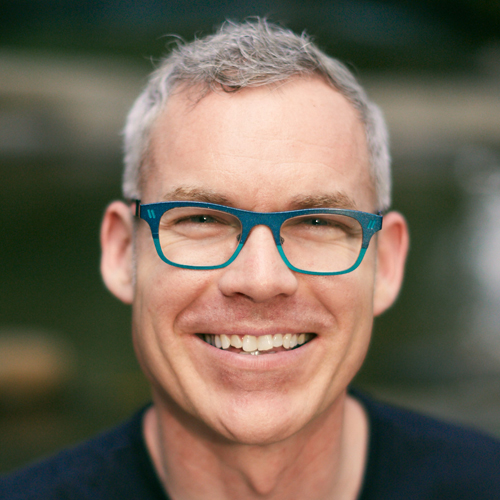
About Ryan Oelke
Ryan Oelke is a co-founder and teacher at Buddhist Geeks and a Senior Teacher of The Realization Process. He has an MSEd in counseling psychology and is contemplative teacher of awakening, healing, and embodiment. He has 20 years experience in meditation, particularly in the Tibetan Buddhist and Dzogchen lineages. Ryan teaches meditation and a way of living dedicated to revealing natural presence and awakening in each moment of our lives, regardless of how it appears to us.
About Corey deVos
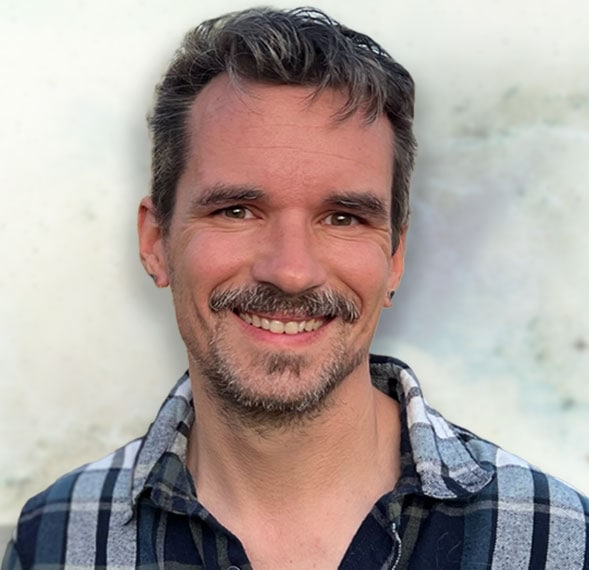
Corey W. deVos is editor and producer of Integral Life. He has worked for Integral Institute/Integal Life since Spring of 2003, and has been a student of integral theory and practice since 1996. Corey is also a professional woodworker, and many of his artworks can be found in his VisionLogix art gallery.
