

In this episode 12 chapters
- How a Leader Knows
Ken introduces Barrett's thesis on late-stage leaders working on sustainability.
- When Complexity Ratchets Up
Barrett cautions against treating growth as goodness and explains that late-stage consciousness pays off when problems become wicked and fast-moving.
- Strategist, Alchemist, Ironist
Ken walks through the teal, turquoise and violet action logics and separates developmental hierarchies from dominator hierarchies.
- Sustainability as Spiritual Practice
The first theme, 'being', shows leaders treating their work as spiritual practice, with meaning that grows from personal to transpersonal to unitive.
- The Softening of Influence
Strategists push and prod systems, alchemists create supportive conditions, and ironists hold space as the system itself.
- Downloading the Design
The second theme, 'reflecting', covers intuition and collective ways of knowing, as well as using systems and complexity thinking to shape conditions no one controls.
- Integral Theory in the Field
Twelve of the 13 late-stage leaders used integral theory to map context, support development, design interventions and tailor communication.
- Look At, Through, As
The third theme, 'engaging', moves from looking at the system with data, to looking through stakeholders' worldviews, to sensing as the system.
- Catalyst, Gardener, Spaceholder
The roles these leaders take on move from assertive catalyst to cultivator of conditions to holder of energetic space.
- Getting One's Stuff Out of the Way
Barrett describes how the research sped up his own growth while he designed a cocoa initiative in West Africa.
- Eight Essential Competencies
Ken lists the 15 competencies, and Barrett names the eight he considers most important.
- Meditate, Journal, Find a Mentor
The thesis recommends meditation, reflective journaling and coaching as ways to make the subject of one stage the object of the next.
“We’re going to need to continue to find very creative solutions to very resource-constrained, incredibly complex situations, and that’s going to require accessing far beyond what the rational mind can bring to the moment, and far more present-moment awareness in order to source the creativity that’s required. But I really see it happening with leaders out there — there’s a cadre of folks that really demonstrate that they’re doing this good work….”Barrett Brown
In this remarkable in-depth discussion, Barrett Brown talks to Ken Wilber about his recent thesis, titled “Conscious Leadership for Sustainability”, in which Barrett explores the extraordinary overlap between leadership, sustainability, and the highest reaches of adult development.
Barrett’s conclusions come from a rigorous study of more than 30 leaders in the field of sustainability. The meaning-making systems (or “action logics”) of all these leaders were assessed using Bill Torbert and Susanne Cook-Greuter’s model of ego development, which employs a variation of the Washington University Sentence Completion Test.
“For me it was important to work with an assessment that I could have confidence in, and essentially help to make a real clear point within the leadership literature and in the sustainability leadership literature that constructive developmentalism and the developmental approach is really something to take deep into consideration in the design of leadership development programs, because of the powerful difference there is in the way that people see as they mature through each of the different world views and each of the different action logics.” –Barrett Brown
From this batch, thirteen individuals were identified as holding the three rarest and most complex action logics that science can measure (Strategist, Alchemist, and Ironist, in Bill Torbert’s terminology for ego development–or roughly teal, turquoise, and violet, in Ken Wilber’s parlance). These thirteen people were then interviewed, and these interviews were then carefully analyzed by Barrett as he began to identify common themes, ideas, practices, and areas of action shared by individuals at each of these advanced stages of development. The results, while preliminary, are nonetheless astonishing, and may leave an indelible mark upon the fields of leadership and sustainability in the future.
So, how are such highly conscious leaders engaging the problem of sustainability? What sets their thinking apart from most other conventional approaches? Listen to this fascinating dialogue to find out!
For a quick overview of Barrett’s research and findings (as well as a closer look at the action logics model), be sure to check out the following Integral Post: Conscious Leadership for Sustainability: Executive Summary
Become a member to access the full episode
Start building your big picture mind & support the global emergence of Integral consciousness

“Integral Life is the most important and globally-relevant platform for the leading edge of Integral consciousness evolution”
– Eugene P.

About Barrett Brown
Barrett specializes in leader development and organizational change. For 20+ years he has supported individuals and organizations to navigate complex challenges and unlock deep capacities. Barrett is often asked to speak about leadership, and has presented worldwide to hundreds of CEOs and government officials. Barrett has been on the leadership team or advisory board of 16 companies, NGOs, and foundations, working in consumer goods, manufacturing, finance, energy, health care, media, and international development.
About Ken Wilber
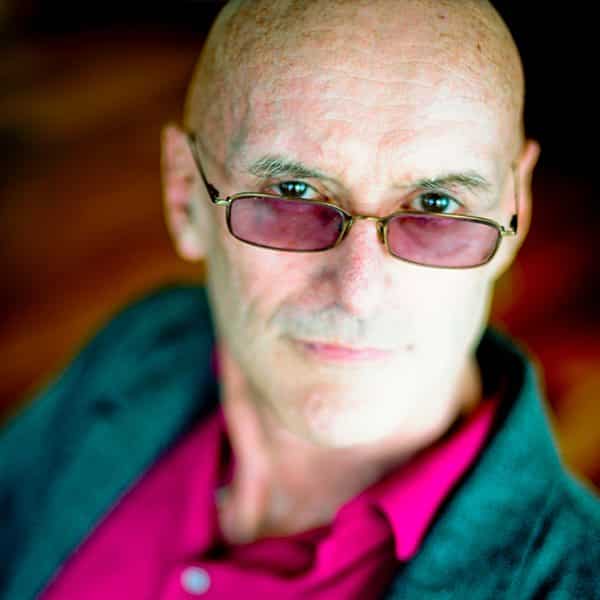
Ken Wilber is a preeminent scholar of the Integral stage of human development. He is an internationally acknowledged leader, founder of Integral Institute, and co-founder of Integral Life. Ken is the originator of arguably the first truly comprehensive or integrative world philosophy, aptly named “Integral Theory”.
