Become a member to access the full episode
Start building your big picture mind & support the global emergence of Integral consciousness

“Integral Life is the most important and globally-relevant platform for the leading edge of Integral consciousness evolution”
– Eugene P.
Former ACLU president Nadine Strossen joins us to explore why censorship is rising across the political spectrum — and why fear-driven speech controls, even when well-intentioned, often do more harm than good.
Perspective Shift:
- Free speech isn’t just one right among many — it’s the foundation that protects all the others. Without the ability to speak, dissent, question, and debate, every other right becomes fragile. Movements for justice, equality, and sustainability can only exist through robust free speech. Censorship isn’t just a threat to expression—it’s a threat to progress itself.
- Harmful speech is real, but censorship is often more dangerous. Yes, speech can wound. But our legal and philosophical frameworks already allow us to restrict speech that incites violence or directly causes harm. What we can’t do is punish speech just because it offends or disturbs. Suppressing “dangerous” ideas only drives them underground and makes them harder to challenge.
- Free speech isn’t partisan — but abuses of it vary in scale and severity. No political party has a spotless record. From Clinton to Bush, Obama to Biden, every administration has tried to limit dissent or control the narrative. But some, like the Trump administration, have gone further — explicitly threatening critics, journalists, and protesters. The principle holds: free speech means defending the rights of those we oppose, not just those we agree with. That’s how its integrity is tested — and preserved.
- True tolerance includes the freedom to hear what you hate. To be free means accepting that others will say things that offend, disturb, or provoke us. That doesn’t mean we endorse it. It means we trust ourselves and our society to engage, refute, or ignore it—without requiring its erasure.
In this sweeping and timely conversation, former ACLU President Nadine Strossen joins Mark Fischler and the Integral Life team to explore one of the most contested — and consequential — issues of our time: free speech. Far from a dry legal defense, this dialogue cuts to the heart of what it means to live in an open, resilient, and evolving society.
Drawing on decades of legal advocacy and personal experience, Strossen makes the urgent case that freedom of speech is not just one right among many — it is the foundation of all other rights. Without it, social justice movements, climate activism, and even basic dissent become impossible.
But we live in a time when censorship is becoming increasingly seductive — not just on the political fringes, but across the cultural mainstream. From government pressure on social media platforms to campus movements demanding emotional safety, the conversation dives into the many faces of censorship, both overt and covert. Strossen unpacks how fear — of viruses, violence, or ideological opponents — often drives well-meaning people to support measures that ultimately erode the very freedoms they claim to protect.
The episode also delves into:
- The bipartisan failure to defend free speech: from Trump’s public attacks on lawyers to Biden-era backchannel “jawboning” of social platforms.
- The emotional cost of censorship culture, especially on campuses, and how it undermines psychological resilience and genuine learning.
- Why the legal system already prohibits harmful speech—and why expanding censorship in the name of protection backfires.
- The challenge of AI-generated misinformation and how to fight fire with fire through technological innovation, media literacy, and tools like “rebut-bots” and pre-bunking strategies.
- How the developmental path of the individual — from fragility to resilience — mirrors the maturity needed for a healthy society that can tolerate diverse, even offensive, perspectives.
- The wisdom of figures like Martin Luther King Jr., Eleanor Roosevelt, and Don Miguel Ruiz, who teach that the ultimate power lies not in silencing others, but in cultivating strength within.
Far from doom and gloom, this is a hopeful and energizing conversation, pointing toward an integral approach to free speech — one that embraces complexity, balances freedom with responsibility, and insists that the answer to harmful ideas is not suppression, but deeper development.
Freedom & Security: A Developmental Polarity
A core thread in this conversation is the evolving tension between freedom and security. These aren’t opposites — they’re co-arising human needs that play out differently across stages of development. Each worldview tries to resolve the polarity, but tends to tilt too far toward one pole, triggering the next stage to correct the imbalance. As we grow, we gain the capacity not just to choose one over the other, but to integrate both with increasing nuance — in ourselves, our communities, and our systems.
| Stage | Freedom | Security |
|---|---|---|
| Egocentric (Red) |
Freedom is domination. I say what I want, take what I want. No limits, no accountability. | Security comes through fear and control — I’m safe if I’m in charge, or feared by others. |
| Group-centric (Amber) |
Freedom is for insiders. My group has the right to speak; outsiders must conform or stay silent. | Security is obedience to tradition, hierarchy, and moral order. Speech protects the group, not the individual. |
| Rational (Orange) |
Freedom is a universal right. Speech enables inquiry, dissent, and the pursuit of truth. | Security comes from law, rights, and rational systems — not from silencing ideas. |
| Pluralistic (Green) |
Freedom is relational. Speech must be inclusive, responsible, and sensitive to identity and power. | Security is emotional and cultural safety. Speech that harms should be challenged or limited. |
| Integrative (Teal) |
Freedom and security are interdependent. Expression should serve growth, complexity, and integration. | Security arises from resilience, structure, and developmental maturity — not repression or fragility. |
| Mature Integral (Turquoise) |
Freedom is transcendence — a quality of being. Speech is sacred, symbolic, and co-creative. | Security is communion — trust in the whole, not control over the parts. |
The freedom/security polarity isn’t just a personal or political issue — it plays out in all four quadrants of reality. Understanding how each developmental stage relates to freedom and security helps us navigate these tensions across inner experience, culture, behavior, and systems.
| Individual – Interior (Intentional) How do I feel about freedom or safety?
|
Individual – Exterior (Behavioral) What behaviors and expressions are allowed?
|
| Collective – Interior (Cultural) What does my community value?
|
Collective – Exterior (Institutional) How are freedom and safety structured into institutions?
|
By looking across all four quadrants — and through the lens of development — we stop reducing free speech debates to slogans or sides. We begin to see the system, the soul, and the subtleties underneath the surface.
Previous Episodes of Integral Justice Warrior










Become a member to access the full episode
Start building your big picture mind & support the global emergence of Integral consciousness
“Integral Life is the most important and globally-relevant platform for the leading edge of Integral consciousness evolution”
– Eugene P.

About Nadine Strossen
Nadine Strossen, the John Marshall Harlan II Professor of Law Emerita at New York Law School and past President of the American Civil Liberties Union (1991-2008), is a Senior Fellow with FIRE (the Foundation for Individual Rights and Education) and a leading expert and frequent speaker/media commentator on constitutional law and civil liberties, who has testified before Congress on multiple occasions. She serves on the advisory boards of the ACLU, Academic Freedom Alliance, Heterodox Academy, National Coalition Against Censorship, and the University of Austin.
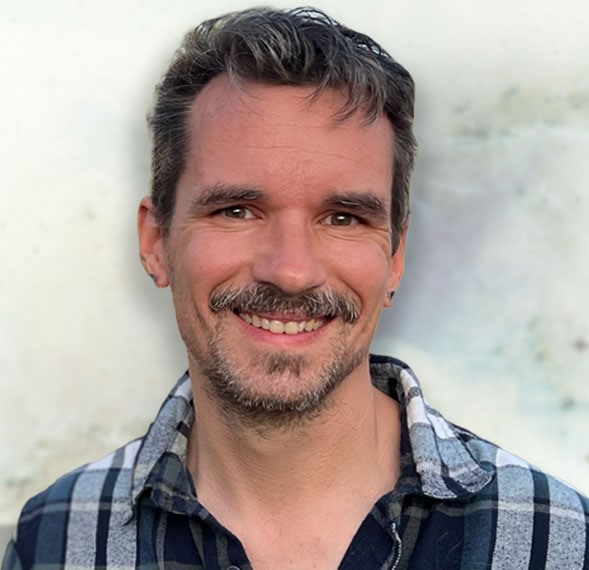
About Corey deVos
Corey W. deVos is editor and producer of Integral Life. He has worked for Integral Institute/Integal Life since Spring of 2003, and has been a student of integral theory and practice since 1996. Corey is also a professional woodworker, and many of his artworks can be found in his VisionLogix art gallery.
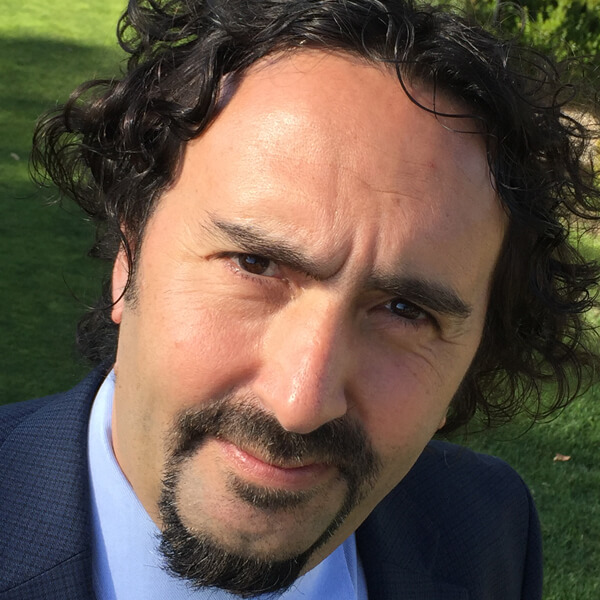
About Mark Fischler
Mark Fischler is a Professor of Criminal justice and current program coordinator for the criminal justice and criminology programs at Plymouth State University. Prior to joining the Plymouth State faculty, he practiced law, representing poor criminal defendants for the New Hampshire Public Defender’s Office. Mark has worked extensively with alternative theoretical models in law, constitutional law, and higher education, and has published on integral applications to teaching, being a lawyer, and legal theory. His focus in the classroom is ethics and criminal procedure, and is well respected for a teaching philosophy that emphasizes recognizing the humanity and dignity of each student. Professor Fischler was awarded the outstanding teaching award at his university in 2014. He currently offers a weekly Spiritual Inquiry class through Satya Yoga Studio.