

In this episode 12 chapters
- What Is Education For?
Mark defines education as passing down, from one generation to the next, how to live a good life in line with the good, the true and the beautiful, and brings in Zach Stein's four crises.
- Sending 18-Year-Olds Away
Drawing on his years in university leadership, Mark questions the residential college model, which has barely changed and sends immature 18-year-olds off to live together long before their brains…
- The Broken Conveyor Belt
Corey and Mark wonder whether schools now produce fewer genuine orange and green minds than they used to.
- Everywhere But Here
Mark describes record anxiety, depression and loneliness among students, and how smartphones erode attention and empathy.
- From Void to Source
Corey tells of a spontaneous awakening at 19 that showed him the meaninglessness he had been numb to, and uses Trent Reznor's music to trace how meaninglessness can open into emptiness.
- A Systemic Diagnosis
Mark widens the view to parenting, distrust of media, materialism, postmodern dominance in the humanities, a missing 'hidden curriculum' of emotional and moral skills, separated academic disciplines…
- The Economics of Injustice
Corey criticizes the $1.7 trillion student debt load and school funding tied to local property wealth, which locks poor communities into worse schools.
- Reimagining Higher Ed
Mark proposes badges for mastered subjects instead of degrees, emotional and moral development as part of the formal curriculum, and residential spaces for mixed-age, lifelong learning.
- Love of Learning and Parents' Rights
Mark argues that test-driven K–12 schooling kills the love of learning, shuts parents out of decisions, and medicates kids who don't fit.
- The Integral Guidance Counselor
Starting from a high school class choice that set him back, Corey proposes bringing back the guidance counselor as an integrally informed life coach who follows each child's developmental lines…
- Redesigning the School
They criticize teaching to the middle, sorting kids strictly by age, and cutting values education, shop and music.
- Deschooling Society
Drawing on Ivan Illich, Mark argues for taking learning out of institutions and dropping credentials as the only gate, and Corey frames this as balancing vertical and horizontal development.
Become a supporting member to watch the full conversation
Humanity is entering the Transformation Age, a new era of human civilization, with Integral Consciousness rising at its leading edge. Our members don’t use Integral Life as just another media subscription they use weekly or discard. Instead, most stay with us for years, using Integral Life to learn Integral Philosophy and build an integral mind slowly, methodically and when they need it. We’re here to help you shape the future that’s emerging no matter where your life takes you.
Get Full Access For $1 (7 days)* Or explore all membership plans → * Trial price for the first 7 days, then $20/month. Cancel or switch plans in 2 minutes at any time.Broken education produces broken people. How can integral perspectives and practices help our education systems generate more happy, healthy, and wholesome kids?
It’s hard to think of anyone better to talk to about this issue than Mark Fischler, who has deep familiarity with the educational system (both as a professor and as a father), with the justice system, and with integral theory itself.
Mark and I take a close look at the many dysfunctions, injustices, and failures we see in our education system — both within the system (how and what kids are being taught) as well as surrounding the system (access to education, funding, etc.).
What should our educational systems be teaching? When we take an integral view, we can see how many different kinds of intelligence our kids are engaged with, all of which we want to help support in our children, both at home and at school:
- Cognitive intelligence (math, science, literature, etc.)
- Creative and aesthetic intelligence (art, music, etc.)
- Interpersonal intelligence (kindness, empathy, tolerance, etc.)
- Intrapersonal intelligence (self-care, self-knowledge, etc.)
- Emotional intelligence (social emotional learning, etc.)
- Psychosexual intelligence (sex education)
- Kinesthetic intelligence (physical education)
- Moral/ethical intelligence (worldcentric standards of right/wrong)
- Self-identity intelligence (“Who am I?”)
- Spiritual intelligence (“What is my ultimate concern?”)
We can also see the importance of the multiple stages of development that all of these different kinds of intelligence grow through over the course of our children’s educational tract, and how these things always need to be taught in a developmentally-appropriate way. We can see the many dysfunctions that can come with launching our kids into Orange self-authoring stages of development within a deconstructed Green environment, without first providing solid Amber foundations for each of these different kinds of intelligence.
Mark and Corey also discuss some of our current cultural controversies, such as the role of “parents’ rights” when it comes to determining what should or shouldn’t be taught to our kids. We then explore some possible solutions for our most wicked educational problems, including a reconstituted role for integral guidance counsellors, who would essentially become as a central integral axle running through the many spokes of our education system — essentially academic “life coaches” that can track kids’ progress in these multiple intelligences over multiple years, who can ensure that they are being supported and challenged in whatever developmental lines they excel in, and who can provide suggestions, resources, and interventions for kids who get “stuck” in any of these lines.
It was a tremendously rich and warm-hearted conversation, and we hope you let us know what you think in the comments below.
Note: This episode was recorded in the weeks before the tragic events of Uvalde, Texas, which thoroughly shattered all our hearts, and which we are each and all mourning in our own way. While it remains virtually impossible to wrap our hearts and heads fully around such magnitudes of suffering, it nonetheless makes integral discussions such as these feel that much more urgent, and deepens the commitment Mark and I share to both pursue and enact integral justice however and wherever we can.
The tragedy in Uvalde requires a multiperspectival deep dive to bring clarity and right action. Recognizing we don’t have easy answers is part of it. That shouldn’t freeze us, but create a fierce urgency to get it right. Where do we go? Start with creating an ethics of care.Mark Fischler
If you enjoy this episode, be sure to check out more episodes of Integral Justice Warrior. Watch them all for only $1!
Written and produced by Corey deVos
Previous Episodes of Integral Justice Warrior

How Fear and Fragility Are Threatening Free Speech
 Nadine Strossen
 December 11, 2025
Polarity Politics and the 2024 Election
Corey deVos
September 26, 2024

Between Hope and History: An Integral View on Israel-Palestine
Mark Fischler
November 18, 2023

From Socrates to Social Media: Renewing Our Commitment to Free Speech
Nadine Strossen
September 7, 2023
Become a member to access the full episode
Start building your big picture mind & support the global emergence of Integral consciousness

“Integral Life is the most important and globally-relevant platform for the leading edge of Integral consciousness evolution”
– Eugene P.
About Mark Fischler
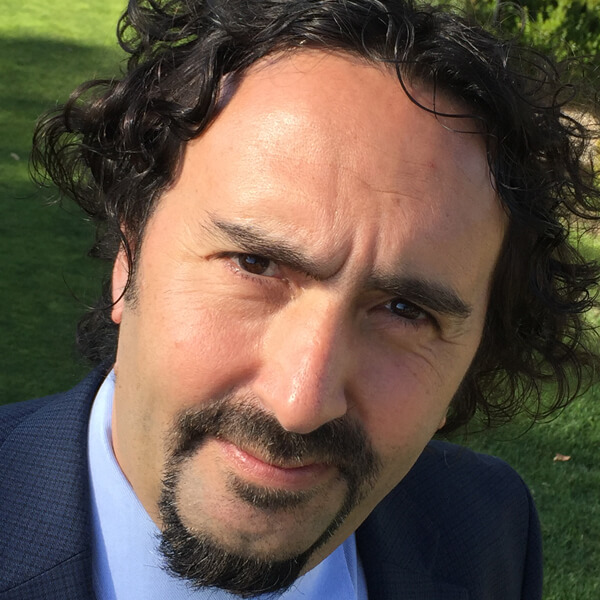
Mark Fischler is a Professor of Criminal justice and current program coordinator for the criminal justice and criminology programs at Plymouth State University. Prior to joining the Plymouth State faculty, he practiced law, representing poor criminal defendants for the New Hampshire Public Defender’s Office. Mark has worked extensively with alternative theoretical models in law, constitutional law, and higher education, and has published on integral applications to teaching, being a lawyer, and legal theory. His focus in the classroom is ethics and criminal procedure, and is well respected for a teaching philosophy that emphasizes recognizing the humanity and dignity of each student. Professor Fischler was awarded the outstanding teaching award at his university in 2014. He currently offers a weekly Spiritual Inquiry class through Satya Yoga Studio.
About Corey deVos
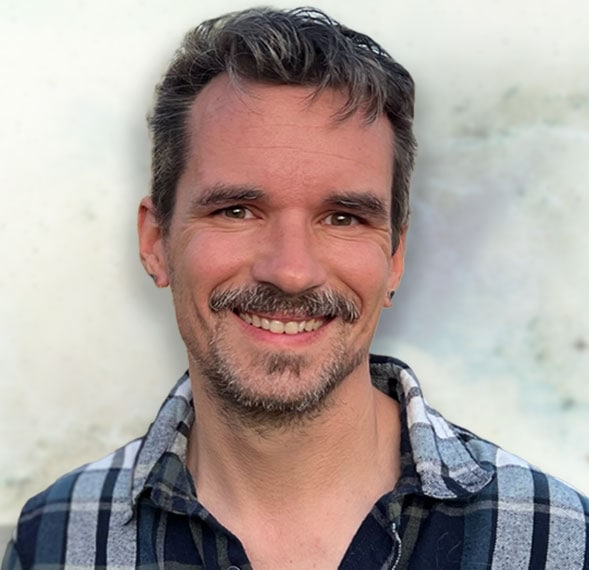
Corey W. deVos is editor and producer of Integral Life. He has worked for Integral Institute/Integal Life since Spring of 2003, and has been a student of integral theory and practice since 1996. Corey is also a professional woodworker, and many of his artworks can be found in his VisionLogix art gallery.
